
Category: Health & Wellbeing
 This morning we are hearing from the US Global AIDs coordinator, the CDC, the smart global health initiative, and some university leaders. The Obama Global Health initiative is promising– building on success but expanding beyond HIV, TB and malaria to include additional health topics, maternal and child health and with a system strengthening focus. It makes no mention of mental health or chronic disease, and presents as a health systems approach, rather than a multi-sectoral approach to health care that acknowledges root causes of suffering like poverty , unhealthy environments, distortion in land use and food systems, and other sources of inequity that lead to poor health. It also stops short of asking the hard questions about how we in the high-income countries might need to change our lifestyles to support global health for all. Still it is a good agenda, one that I support and would be proud to collaborate on.
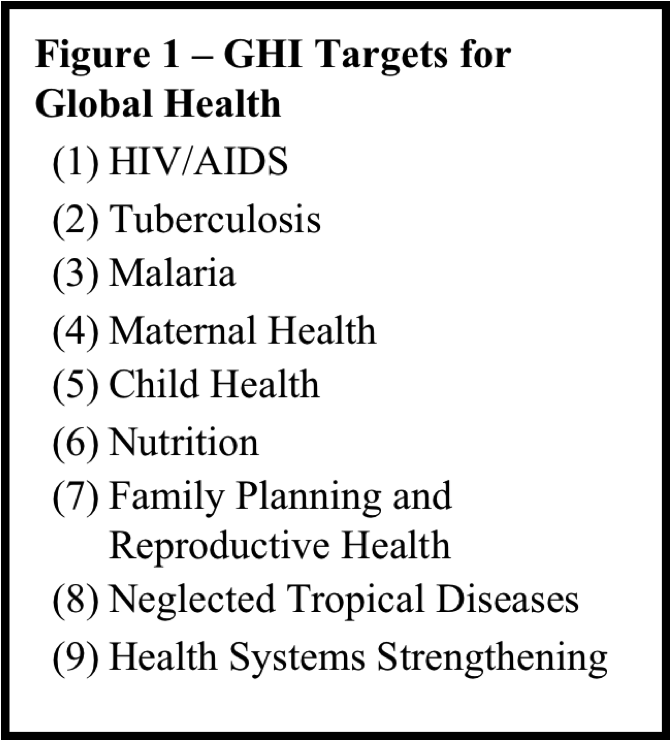
http://www.theglobalhealthinitiative.org/documents/report.pdf
Despite the consensus about the agenda, the environment will be challenging. It is uncertain what funding will be allocated. Are we are at a plateau point or will there will be continued growth? Kevin de Cock of CDC was especially good, conveying a clear sense of the unique role of CDC, identifying winnable battles (polio,prevention of maternal to child transmission of HIV and STDs, elephantitis, tobacco control, prevention of injuries) and speaking about the importance of young people in the future of global health, and the social and environmental justice aspects of identifying and responding to these conditions. In addition to the priorities in the GHI, he says, in the future there will be opportunities to collaborate globally in areas related to non-communicable diseases and in addressing the root causes of these conditions in human health and nutrition and the environment.
This entry was first posted on September 21, 2010 at 11:20 am.

With so many other actors involved in global health what is the unique contribution of the university? Tachi Yamada said that since the renaissance people have turned to Universities, yet in recent times, the Universities, and perhaps especially medical schools, have allowed their agendas to be driven by grantors, resources, and clinical practices rather than fundamental needs. Universities can take back the high road, he says, by focusing on global peace and security and climate change, and global health must be on the agenda also.
I sit in the audience reflecting on my work at the University of Wisconsin-Madison, and the themes resonate. We do want to have impact on quality of life, both in our state and in our world. Our new educational programs are preparing students to see global health in a larger multi-sectoral context. Yet we know we have to do more and we are working to figure out what the best thing we can offer is. Yamada says the answer is innovation, new knowledge, new insights, that can be applied to problems in a practical way. To me it sounded like the Wisconsin Idea, which is not new, that the discoveries at Wisconsin will be used to improve quality of life around the state and in our world. This idea is always evolving, and maybe needs to become explicitly global, but it is a part of our institutional psyche that we can build on. Meanwhile, we and every other University in the room face the challenges of silos, turf wars, and institutional values and politics that hamper the potential of the very innovators that they want to champion!
Yamada goes on to say that innovation can be evolutionary and revolutionary….improved bed nets and creative production and distribution is evolution, while “donfusant” technologies (love that term!) that treat mosquitoes so that they can no longer smell humans is revolutionary. Innovators need supportive environments and real resources that are not at the mercy of funding cycles. The academic medical center is a very important institution with a mandate to alleviate suffering that must be honored.
Susan Desmond Hellman of UC, San Fransisco spoke next. She began with a word of wisdom as a mentor: do something that makes you feel uncomfortable. We should all try to take a small risk for global health today in some way…. After talking about her experience as an HIV/AIDS researcher in Uganda in the late 80s, Susan talked about the potential of the relationship between industry and Global Health. She described both opportunities and challenges in this relationship, emphasizing the importance of industry for innovation. Industries have talent and technologies as well as development and delivery expertise and they understand regulatory environment. They do have good intentions, she asserts, and there is more emphasis on prevention and cost than ever. A big challenge is how to define the effort: is global health work a form of philanthropy or an area of product development. A second challenge is how to understand global health efforts in terms of industry priorities. A third challenge is working through inconsistent funding streams of industry.
As Chancellor of UCSF, Susan leads a growing global health sciences effort that embraces leadership, global health care, public health, education and capacity building in partner institutions. This is the way the world is going – and they are doing Global Health 4.0. They are partnering on one health, womens health, and migration health with different California system partners and there is great enthusiasm about it among faculty and students.
Jean William Pape, spoke about a the Cornell-Haiti Collaboration-(GHESKIO). Pape began with a video about this partnership in Haiti http://www.youtube.com/watch?v=vn6WpPtNtck established in 1982 in partnership with Cornell and they still work together today with GHESKIO serving 20,000 patients. After the quake they found and maintained treatment for nearly every patient…. and because of their presence and trust and the dire need they were transformed overnight into a refugee camp and emergency hospital.
After the film he talked about the collaboration with Cornell. Some of the Haitian nurse leaders from the 70s are still with the program! Their initial high impact success was introduction of oral re-hydration therapy, and dehydration in adults (a symptom of AIDS) led them to get involved in designing the disease, coming up with a workable care model. They are funded by NIH, PEPFAR and a number of other key players. The care model is broad, from prevention to detection and treatment and even a micro-credit program. he earthquake has resulted in three new tasks: an acute care hospital, a TB hospital, and care for 7000 refugees. They are providing training for nurse practitioners, lab techs, and public health practitioners. The biggest challenge is relocation of 1.2 million refugees…how can we make them model global health villages.
In closing he states that a successful global health center has leaders on both sides, excellent research, investigator training and focus on the poor. North and south relationships are built on institutional relationships but success depends on personal relationships in which the partners selflessly do what is the best of the country.
So there you have it: a prescription for effective University engagement in Global Health — innovate, take a risk, work in partnerships, and selflessly do what’s right. Should be easy, shouldn’t it?
Hans and Melinda are talking to EVERYONE…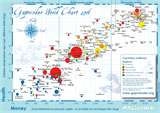

… at a TED Exchange about the MDGs that is being broadcast live from New York all over the world. Hans Rosling, the father of Gapminder, is like a wonderful grandfather storyteller. He is wise, funny, a statistician. Right now he is overflowing with love for the exhilarating truths about what the MDGs are accomplishing. He is passionate and is making complex epidemiology easy and showing us what is really happening in terms of child mortality. He showed us progress in Kenya- data out just last Friday show a HUGE drop in mortality. He and then discusses Switzerland, Thailand and Egypt. Great success stories in the long-term….Ghana and Kenya are on their way up, yet there are standstill countries that needs help. He is showing family size decreasing with child mortality increasing and he is narrating it like a horse race …. Some people are laughing out loud. He is praising Friday’s report on MDG progress…no wait…. he is saying some of it is crap now, tearing out the flawed page and recommending the report to all! His logic flies but everyone is following it. Now he has moved on: child mortality can drop by 50% with female education, and the effect is seen in 15 years. He just gave us hope for women and is now on to the environment….the fertility reduction is ESSENTIAL to save the the planet, so all the things we are about fit together, and they can be done. See Hans for yourself….
I have been following Melinda Gates blog and have felt an affinity with her values; the way she is emphasizes the importance of story to produce truth and hope, and her emphasis on the well-being of women and children, so I think I am going to enjoy this. She is starting her TED by talking about hope and er…Coke? It is a fair bit of airtime on Coke’s successful business model, and while I get that, this is not what I expected. Key strategies are use of real time data, local franchising and incentives, and great marketing that is aspirational. These insights can, are, and should be applied to realization of the MDGs. She is making the link to an Ethiopian program where child mortality has dropped dramatically because if health extension workers…..Now Melinda is having us watch a Coke add… it is moving. Still, I reflect on our recent campus conversation inspired by Michael Pollan’s , “In Defense of Food,” and I am cognizant of all the obesity and health problems caused by consumption of colas, and corporate food models generally. So I’m not sure “I’d like to buy the world a coke…” — I would rather teach the world to sing or plant a garden and I do think it is important to remember that the person who dreamed of teaching the world to sing came first. Probably Melinda knows this…I think we grew up on the same songs…Now she is on to open defecation …a serious health problem but the solution, toilets, have to be marketed socially. The same with male circumcision…..Now she is addressing Polio and how local data can be used to prevent outbreaks. Unfortunately donors are losing patience with polio just when we are so close to succeeding. See Melinda for yourself….
The takeaway for this session for me is that in order to be informed citizens people from all disciplines need to understand health statistics the way they understand football or baseball or soccer stats….We also need to learn from successes from all sectors, including business, and, I would add, we should also remember and emulate the incredibly legacy of civil society and rights-based movements.

During the opening session, Peter Piot summarized three big historical trends in how we talk about health issues that transcend national boundaries– first there was tropical medicine,then there was international health, and now, as we talk about global health, a new paradigm for global health is emerging. This new paradigm,which he calls Global Health 4.0, will include more voices from regions outside North America, both from Europe and low-income countries. Global Health is not a region, an “over there: it is worldwide. PI ‘s should will be from many countries, and what we now call “research sites” will become Centers of Excellence where joint learning takes place. Also, the infectious disease focus is too narrow, global health must address non-communicable disease as well. Research will shift is focus, now leaning heavily toward randomly controlled trials, there needs to be more translation and implementation science. While we are still working on what it really means to support the health of populations and not just individuals, we need to also integrate the environment as a third focus of attention. Finally, “Global Health 4” needs to foster a network of higher education for all.
Fitzhugh Mullan reported on a study of medical education in Sub Saharan Africa. They did 10 site visits and a survey of 164 schools, and realized a 72% response rate. Twenty percent of graduates migrate out of the country, and another 20% or so work in NGOs and the private sector. Less than 10% of faculty do research. Biggest needs that emerged were to build faculty capacity, develop infrastructure, forge links to MOH, increase funds for research, and promote primary care.
Lincoln Chen spoke about education for health professionals in 21st century. In the spirit of the 1910 Flexner report which reformed medical education, he reported on the work of a consortium that focused on medicine, nursing and public health education. The identified 2400 medical schools globally, 460 schools of public health– they could not accurately assess the number of nursing schools. Their results, to be included in a forthcoming Lancet Commission report, point toward a new kind of medical education that links the education system and the health care system. As the Flexner work brought medical education into the university, and problem-based reform and the rise of academic medical centers made further improvements, now the 3rd stage should be systems-based reform. Education must be informative (expert) , formative (values, professionalism), and transformative (leadership for change). To realize these goals networks and consortia are critical.
This was an inspiring start with lost of ideas and best practices within the health sciences articulated, but so far they have not mentioned any disciplines from outside the health sciences, such as engineering, agriculture, or education and how they can collaborate for global health. It makes me feel very fortunate to be at UW-Madison where I have had the change to work with faculty and students from the health sciences, engineering, agriculture, social work, and even astronomy.
Tomorrow morning the plenary meetings start at 6 am Seattle time, with the roundtable at 7 and then Melinda Gates at 8:00. I hope some UW students will watch some of these and participate in the blog!
 You won’t believe want happened to me in the Madison Airport on the way to the CUGH conference! I had a great exchange with Bono himself (sort of) about the MDGs! You can get a good sense of what he said in the Sunday NY Times this week …. In fact those were pretty much literally his words to me if you know what I mean… He shared his thoughts about what needs to be done and it was really consistent with the things I have been reading from Gates and the UN. He thinks the UN meeting will be important and successful and suggests tuning in for the plenary sessions especially. So do try to check out those CUGH webcasts and slides.
I know a lot of people are wary about the Bono dynamic, and feel that we should listen more to African leaders, rather than having Bono do all the talking. Today I had the feeling that Bono kinda gets that… The critique has more to do with the choices we make as listeners, right?…. So I had no reason to dis Bono. I believe in caring and working for change and justice like he does. With all the voices coming at me though, I am going to make a special effort to listen to leaders from Africa and other low income countries as I attend these events. Remember to tune in to the tedxchange event tomorrow online at 10am Madison time (CDT)! Hope to see some comments here from UW students and faculty.
I am just setting off for Seattle, Washington to attend the Conference of the Consortium of Universities for Global Health. The theme of this years meeting will be, “Transforming Global health: The Interdisciplinary Power of Universities.” My colleagues and and I will be presenting a poster poster entitled “Interdisciplinary Global Health Education at the University of Wisconsin-Madison: Unique Responsibilities and Contributions of the Public Land Grant University.” I will also be reporting back to faculty and students through this “real time” blog so that they can follow the meeting and contribute comments from campus. If you want to see the program, which includes a number of webcast sessions, visit http://www.cugh.org/. Our poster is entitled “Interdisciplinary Global Health Education at the University of Wisconsin-Madison: Unique Responsibilities and Contributions of the Public Land Grant University.”
While the CUGH meets about Global Health in Seattle, the United Nations Summit on the Millennium Development Goals will be held in New York. That meeting includes six sessions with statements from almost every country, and also concurrent roundtables on 1) poverty, hunger and gender equity, 2) health and education, 3) sustainable development, 4) emerging issues, 5) the needs of the most vulnerable populations and 6) widening and strengthening partnerships. You can read background papers, country statements, and sign up for notification of webcasts at http://www.un.org/en/mdg/summit2010/ … I am not suggesting that you pad your resume by pretending that you were invited to a UN Summit, but you can follow on line so well that no one would ever know you were not there!
Wait …there’s more. The Gates Foundation TedxChange is also hosting a global web-based event which is on Monday, September 20th on the MDGs. They will ask the questions “What has worked?” and “How can move forward?” This event is going to be webcast live at http://www.gatesfoundation.org/tedxchange/Pages/default.aspx on Monday from 10 to 11:30am CDT. They also sponsored a video contest which includes several hundred 5 minute videos about the MDGs from all around the world. You can check them out at http://www.viewchange.org/. There are over 50 on health care alone, not to mention important health related topics like food, water, and the environment. The winners are going to be announced on the 20th at 2:00pm CDT.
I know this might seem like too much information…that’s why I am going to cover all three events on this blog! I am going to attend CUGH meetings live, monitor UN webcasts and country statements as they are posted, and I can’t resist the TedxChange… I have already watched at least 15 of the video shorts on the MDGs.
While this all sounds busy, I am hoping it can be a time for synthesis and discernment for me personally. There is so much need, so much potential, so much information, so many directions we could take… What is the best way to act on my values and identity as a woman, mother, sister, friend, public health professional, blogger (confession: this is my first blog post ever) and member of the UW community. I will be reflecting on the global health education that we offer, the kinds of field work our students do, and I hope that some students and colleagues will explore these events with us and post their comments and insights as well.
This entry was posted on September 19, 2010 at 7:29 pm at the CUGH Conference.
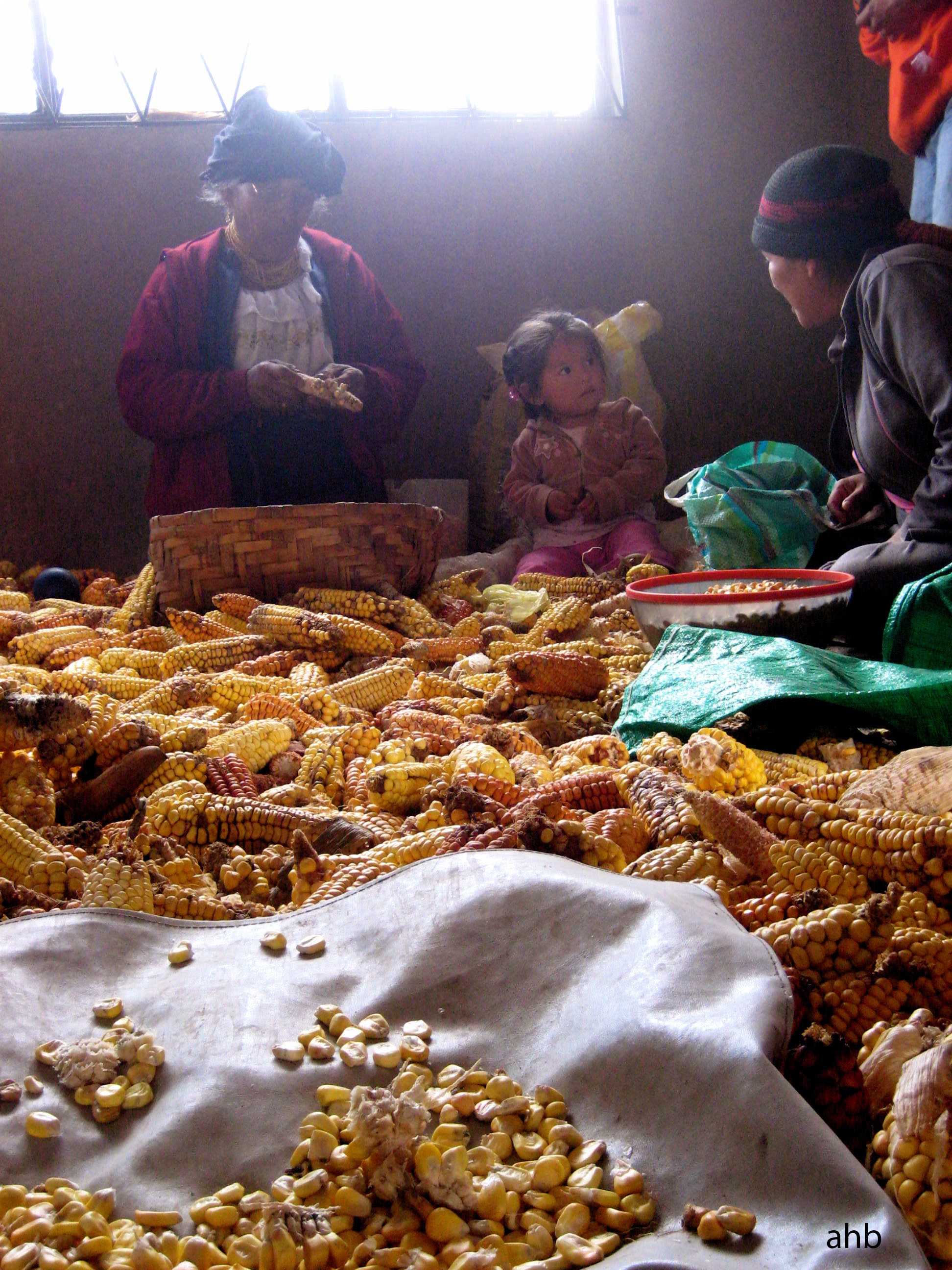
Harvesting Maize
Dona Margarita, an indigenous woman from La Calera, Ecuador, graciously gave me permission to use this beautiful photo. University of Wisconsin students visit Magdalena’s village each year to learn about indigenous culture and work with the community. I join this field course, led by anthropologist Frank Hutchins, as a public health instructor, exploring determinants of health and well-being alongside the students, and addressing topics that range from access to water, to gardens and family nutrition, to basic first aid, to micro-enterprise for women.
This visit took place around the time of the harvest of quinoa and maiz. Margarita and her granddaughter are shelling maiz. As she explained the local agricultural cycle to our students, one of them knelt down to help, and before we knew it we were all on our knees, working and listening. During such moments students learn about health problems that communities face, the resilience of women like Margarita, and the efforts that the community has made to move forward.
One year students helped Margarita plant her potato field. The next year she was behind a closed door in a dark house, grieving. One of her sons, who she had worked so hard to nurture and educate, was killed while working in Quito with at risk youth. While the details of his violent death were murky, it was clear that, in addition to facing the challenges of rural poverty, Margarita and her family live with a double burden, as they are also touched by problems associated with rapid urbanization a struggling national economy, insecurity and political unrest.
The young man in the photo is Margarita’s other son, Luis, who serves as a guide in our community work, in addition to working the land himself, he is committed to preserving his culture, and earns a living as a guide and leader in the local eco-tourism movement. Luis and his neighbors hope that they can find ways to share their culture, and at the same time create economic alternatives to destructive mining, the rise of the flower export industry, and other practices which may not be sustainable, healthy or equitable, and do not embody indigenous values.
Maragarita’s life is intimately intertwined with the life-cycle of the maize and quinoa that she grows. Quinoa, a high-protein grain touted as a miracle food, is the staple of the indigenous food tradition in this region of Ecuador. The year this photo was taken, the quinoa crop had failed. The climate is changing, members of the community observed, and they felt sure it had something to do with how we, all of us, are living. There is a growing body of research suggesting that people like Margarita are the first to notice the effects of climate change, and perhaps can help to identify early warning signs. During their time in Ecuador, the students are encouraged to compare their environmental footprint with Margarita and the other residents of La Calera. We all return to Wisconsin with the awareness that, in addition to working side by side with Magdalena’s community to address poverty, we in Wisconsin need to change some things about how we are living. Together we discover and rediscover the importance of learning from, standing with, and when necessary standing for, people like Margarita. People who we are privileged to share the world with. People who are a lot like us.
Based on Remarks from UW-Madison Global Health Retreat, May 2010
Photo: Abriana Hau Barca, 2008
During my first visit to Ethiopia I was working with partners from Save the Children and had a chance to visit their programs for vulnerable children. Some of these children had lost a mother or father due to HIV/AIDS, some had lost both. Some were HIV positive, some were not. Some had watched their parents die with little help and no pain relief. While many children facing this situation are taken in to the loving care of the extended African family, these children had fallen through the cracks. Many of them experienced the ravages of hunger, poverty and abuse, on top of the pain of parental loss. The programs we visited were working with these children and their caretakers to assist them with shelter, food, education, health care, psychosocial support, legal assistance, and income generation activities.
 Education: The school was made of corrugated tin. There were about 270 children in three small rooms. We stooped to enter to find tables in neat lines on the dirt floor, school supplies in good order, and children in matching uniforms singing for us! As I scanned the room it was like a roomful of kinds anywhere, some singing out of duty, others pure joy. But it was different than the classrooms I was used to also. Among these children, who are all here because they need some kind of help, a few stood out as needing more. I pause here, because I resist describing the telltale signs of damage on a child. The front room was windowless, but had both a doorway and a hole in the roof to let in light. We were led in to the room behind, darker still with no egress, where the older children were working on reading and math. They stood to attention when we entered, except for a girl in the front row who looked to be about nine (likely she was older), who kept at her arithmetic. She caught me looking at her and offered me her notebook. Rows of arithmetic. Getting them right. I looked at the simple structure, breathed in the thick heat in this back room, and wondered at what it would be like to study here all day. Yet real learning was taking place.
Selling Eggs
Income generation: We visited an income generation project where the community was keeping chickens and harvesting eggs to eat and sell. They were doing well and had a big basket of eggs for sale to show for it.
Down the road at the chicken farm we were regaled with the story of how the women were opening a restaurant. They were so proud to be making money and taking care of their families.

Dance Club
Psychosocial Support-DANCE! We also visited a youth club that is oriented toward providing recreation, psychosocial support and education about how to stay healthy and AIDS free. This group had specialized in dance, and they became so good that they won a number of competitions and had had a chance to travel together to Cuba to dance! The school drama club joined in with acts and songs related to healthy lifestyles, addressing the stigma that they sometimes experience, and other topics of their choosing. It was great to see these young people excelling in a physical activity and supporting each other.

School Garden
Food: While all kinds of food assistance is taking place here, from breakfast programs to food distribution to households, one wonderful and hopeful program we saw was a school garden when children in vulnerable situations grow their own food, learn gardening skills, and benefit from enjoying it also.
It is sobering to know that programs like these are reaching only a small proportion of children who need them. But being with these children, even in this cursory way, made me want to work very hard in the following weeks and months to make a difference for them.
Based on journal entries and emails from February 2007.


 Reflections