
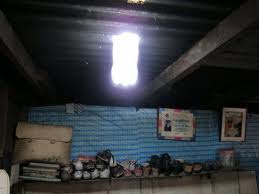
Low-Tech Solar “Liter of Light”
Low-Tech Solar “Liter of Light”

Ethiopian Masinko and other Traditional Instruments
I made it home from Ethiopia yesterday. It was a wonderful trip in so many ways. I was so busy and with the time change and limited internet access I did not have a chance to write the usual news from the field to family and friends so I thought I would do so here now while everything is fresh in my mind.
I have been to Ethiopia before, so I had a good sense of what to expect and I knew it was a very interesting and hospitable culture. However, all the good expectations were doubled by the fact that I already knew 8 of the Ethiopian colleagues that we were working with since they had had fellowships at UW, and because the QA advisor working with me, Roman Aydiko, a UW-Madison student who I really enjoy working with, is from Ethiopia herself. We trained 60 hospital leaders in quality improvement and followed up on 8 projects that were already underway. There has been good progress on all the projects but two have been very successful, one related to infection control (improvement from 33% to 69%) and one related to fully implementing triage (from less than 10% to 100%).
The Black Lion Hospital is the largest hospital in the country, and serves the most serious cases and has the most active emergency department. We are working with the emergency department and the pediatric emergency departments in particular. During my first day I visited those wards which I have been hearing about for months. I think you can imagine that visiting these sites is a powerful experience, with such serious resource limitations and lines of patients hoping to get care. The health care providers are among the most talented people in the country –chosen for medicine because of their intellectual abilities. It is hard to see them struggle to provide care in a ward where water systems for basic sanitation are not always working and there are shortages of basics like sheets, gloves, face masks, etc. Roman and I brought 4 suitcases full of sheets and gloves and masks and hand sanitizer as a gesture of solidarity. We thought this made sense because we know the hospital is working to get these things in place so jump starting them on something like sheets helps — they can manage replacement as they wear out etc. We also brought scrubs which they were delighted with because they can use them as uniforms. It was a very joyful thing for us to give them things that we know will be put to immediate use.
In addition to working very hard I got a chance to get a feel for Addis Ababa. I went shopping and really enjoyed buying some beautiful scarves, wonderful Ethiopian coffee, and a drum and masinko — two traditional instruments. I also visited the national catherdral and an old orthodox church. Spent time strolling around Addis which is a really nice African City — so much that is ancient right along side modern buildings and city bustle. In addition to eating great Ethiopian food every day at lunch time we also went to a traditional ethiopian restaurant that had all kinds of cultural dancing going on during dinner. I loved the food and music and dancing!
The other wonderful and unexpected aspect of my trip was that two very good friends from the DC area happened to be there. Tessie and I had worked together and spent lots of time together when our children (now in high school) were babies. Marie Eve and I had shared some very important work related to vulnerable children but we had lost touch -what a gift to reconnect with her. She is now working for Save the Children and we enjoyed reconnecting as friends. She, Tessie and I are hoping and planning to do more work for vulnerable children together in the near future.
There were extremes to digest in all this as you can imagine. It was quite something to be working in solidarity with the mothers in line at the pediatric ER by day, and dining at the what is reputed to be the best Italian restaurant outside of Italy with old friends in the evening!
One thing that has always bothered me about development assistant projects (and I have worked on many) is the way the money flows, as they are very strict about procuring items on the local economy, yet they give very generous allowances for hotels and lodging. I decided to deal with this by using the food allowance for a local cause, and then I can buy my own food, which I would have had to do at home anyway. A girl’s gotta eat, right? I shared my plan with Roman who, through her Ethiopian network, knew a very worthy young man who is trying to get funds together to pursue a masters in development with a focus on environmental sustainability. He is very smart but “behind” some of his peers because he had to help raise his 8 siblings before he could consider this. He still has lots of family responsibilities, but is getting started with his studies. I am using the food money that I got for the week to help him out (in installments with reports from him) and I am also going to find him an academic buddy at UW who has similar interests. We met twice during my visit and he is so appreciative of the help and so hard working and deserving. And the only cost to me is a cleaner (but not totally clean) conscience about how development assistance money is used.
This trip was full of things that I expected and I did not expect, both named and unnamed here. I am considering it a message from the universe about my life and what I am doing and what I should be doing. Unfortunately, I cannot actually decipher the scroll in my hand ! I am hoping that continued reflection and finding the right balance between planning and being open to life will help me find out what it all means …
It was great to get home where job one is to decorate for Christmas and make a big pile of potato gnocci for my family!
Based on email December 2010.
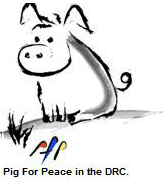 Yesterday I was really moved by a presentation about an effort in the Congo that is addressing the needs of communities who are trying to rebuild after conflict situations where rape was used as a weapon systematically and livelihoods were destroyed. The program includes HIV screening and care, mediation for families who are trying to come together and integrate family members who have experienced atrocities, and economic strengthening. A pig breeding program is taking off and providing hope and a fresh start for many. There are now 700 families on the waiting list and you too can be a partner in pig farming by contributing at Pigs for Peace. Nancy Glass, who presented the work gave us a very real sense of the suffering of the women she is working with, but also showed us that there is hope and that universities can be partners for change.
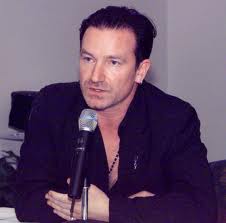 You won’t believe want happened to me in the Madison Airport on the way to the CUGH conference! I had a great exchange with Bono himself (sort of) about the MDGs! You can get a good sense of what he said in the Sunday NY Times this week …. In fact those were pretty much literally his words to me if you know what I mean… He shared his thoughts about what needs to be done and it was really consistent with the things I have been reading from Gates and the UN. He thinks the UN meeting will be important and successful and suggests tuning in for the plenary sessions especially. So do try to check out those CUGH webcasts and slides.
I know a lot of people are wary about the Bono dynamic, and feel that we should listen more to African leaders, rather than having Bono do all the talking. Today I had the feeling that Bono kinda gets that… The critique has more to do with the choices we make as listeners, right?…. So I had no reason to dis Bono. I believe in caring and working for change and justice like he does. With all the voices coming at me though, I am going to make a special effort to listen to leaders from Africa and other low income countries as I attend these events. Remember to tune in to the tedxchange event tomorrow online at 10am Madison time (CDT)! Hope to see some comments here from UW students and faculty.
I am just setting off for Seattle, Washington to attend the Conference of the Consortium of Universities for Global Health. The theme of this years meeting will be, “Transforming Global health: The Interdisciplinary Power of Universities.” My colleagues and and I will be presenting a poster poster entitled “Interdisciplinary Global Health Education at the University of Wisconsin-Madison: Unique Responsibilities and Contributions of the Public Land Grant University.” I will also be reporting back to faculty and students through this “real time” blog so that they can follow the meeting and contribute comments from campus. If you want to see the program, which includes a number of webcast sessions, visit http://www.cugh.org/. Our poster is entitled “Interdisciplinary Global Health Education at the University of Wisconsin-Madison: Unique Responsibilities and Contributions of the Public Land Grant University.”
While the CUGH meets about Global Health in Seattle, the United Nations Summit on the Millennium Development Goals will be held in New York. That meeting includes six sessions with statements from almost every country, and also concurrent roundtables on 1) poverty, hunger and gender equity, 2) health and education, 3) sustainable development, 4) emerging issues, 5) the needs of the most vulnerable populations and 6) widening and strengthening partnerships. You can read background papers, country statements, and sign up for notification of webcasts at http://www.un.org/en/mdg/summit2010/ … I am not suggesting that you pad your resume by pretending that you were invited to a UN Summit, but you can follow on line so well that no one would ever know you were not there!
Wait …there’s more. The Gates Foundation TedxChange is also hosting a global web-based event which is on Monday, September 20th on the MDGs. They will ask the questions “What has worked?” and “How can move forward?” This event is going to be webcast live at http://www.gatesfoundation.org/tedxchange/Pages/default.aspx on Monday from 10 to 11:30am CDT. They also sponsored a video contest which includes several hundred 5 minute videos about the MDGs from all around the world. You can check them out at http://www.viewchange.org/. There are over 50 on health care alone, not to mention important health related topics like food, water, and the environment. The winners are going to be announced on the 20th at 2:00pm CDT.
I know this might seem like too much information…that’s why I am going to cover all three events on this blog! I am going to attend CUGH meetings live, monitor UN webcasts and country statements as they are posted, and I can’t resist the TedxChange… I have already watched at least 15 of the video shorts on the MDGs.
While this all sounds busy, I am hoping it can be a time for synthesis and discernment for me personally. There is so much need, so much potential, so much information, so many directions we could take… What is the best way to act on my values and identity as a woman, mother, sister, friend, public health professional, blogger (confession: this is my first blog post ever) and member of the UW community. I will be reflecting on the global health education that we offer, the kinds of field work our students do, and I hope that some students and colleagues will explore these events with us and post their comments and insights as well.
This entry was posted on September 19, 2010 at 7:29 pm at the CUGH Conference.
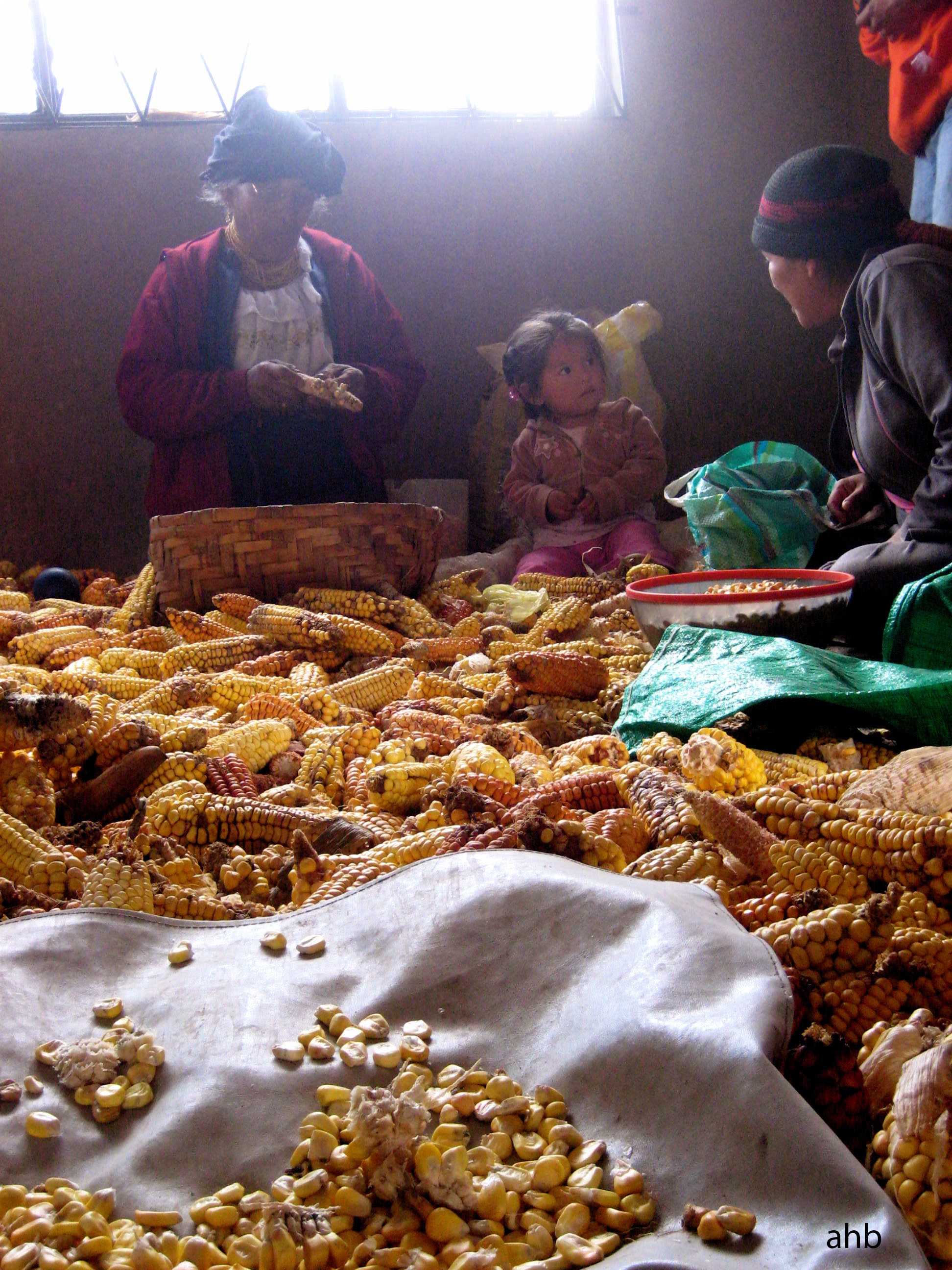
Harvesting Maize
Dona Margarita, an indigenous woman from La Calera, Ecuador, graciously gave me permission to use this beautiful photo. University of Wisconsin students visit Magdalena’s village each year to learn about indigenous culture and work with the community. I join this field course, led by anthropologist Frank Hutchins, as a public health instructor, exploring determinants of health and well-being alongside the students, and addressing topics that range from access to water, to gardens and family nutrition, to basic first aid, to micro-enterprise for women.
This visit took place around the time of the harvest of quinoa and maiz. Margarita and her granddaughter are shelling maiz. As she explained the local agricultural cycle to our students, one of them knelt down to help, and before we knew it we were all on our knees, working and listening. During such moments students learn about health problems that communities face, the resilience of women like Margarita, and the efforts that the community has made to move forward.
One year students helped Margarita plant her potato field. The next year she was behind a closed door in a dark house, grieving. One of her sons, who she had worked so hard to nurture and educate, was killed while working in Quito with at risk youth. While the details of his violent death were murky, it was clear that, in addition to facing the challenges of rural poverty, Margarita and her family live with a double burden, as they are also touched by problems associated with rapid urbanization a struggling national economy, insecurity and political unrest.
The young man in the photo is Margarita’s other son, Luis, who serves as a guide in our community work, in addition to working the land himself, he is committed to preserving his culture, and earns a living as a guide and leader in the local eco-tourism movement. Luis and his neighbors hope that they can find ways to share their culture, and at the same time create economic alternatives to destructive mining, the rise of the flower export industry, and other practices which may not be sustainable, healthy or equitable, and do not embody indigenous values.
Maragarita’s life is intimately intertwined with the life-cycle of the maize and quinoa that she grows. Quinoa, a high-protein grain touted as a miracle food, is the staple of the indigenous food tradition in this region of Ecuador. The year this photo was taken, the quinoa crop had failed. The climate is changing, members of the community observed, and they felt sure it had something to do with how we, all of us, are living. There is a growing body of research suggesting that people like Margarita are the first to notice the effects of climate change, and perhaps can help to identify early warning signs. During their time in Ecuador, the students are encouraged to compare their environmental footprint with Margarita and the other residents of La Calera. We all return to Wisconsin with the awareness that, in addition to working side by side with Magdalena’s community to address poverty, we in Wisconsin need to change some things about how we are living. Together we discover and rediscover the importance of learning from, standing with, and when necessary standing for, people like Margarita. People who we are privileged to share the world with. People who are a lot like us.
Based on Remarks from UW-Madison Global Health Retreat, May 2010
Photo: Abriana Hau Barca, 2008
During my first visit to Ethiopia I was working with partners from Save the Children and had a chance to visit their programs for vulnerable children. Some of these children had lost a mother or father due to HIV/AIDS, some had lost both. Some were HIV positive, some were not. Some had watched their parents die with little help and no pain relief. While many children facing this situation are taken in to the loving care of the extended African family, these children had fallen through the cracks. Many of them experienced the ravages of hunger, poverty and abuse, on top of the pain of parental loss. The programs we visited were working with these children and their caretakers to assist them with shelter, food, education, health care, psychosocial support, legal assistance, and income generation activities.
 Education: The school was made of corrugated tin. There were about 270 children in three small rooms. We stooped to enter to find tables in neat lines on the dirt floor, school supplies in good order, and children in matching uniforms singing for us! As I scanned the room it was like a roomful of kinds anywhere, some singing out of duty, others pure joy. But it was different than the classrooms I was used to also. Among these children, who are all here because they need some kind of help, a few stood out as needing more. I pause here, because I resist describing the telltale signs of damage on a child. The front room was windowless, but had both a doorway and a hole in the roof to let in light. We were led in to the room behind, darker still with no egress, where the older children were working on reading and math. They stood to attention when we entered, except for a girl in the front row who looked to be about nine (likely she was older), who kept at her arithmetic. She caught me looking at her and offered me her notebook. Rows of arithmetic. Getting them right. I looked at the simple structure, breathed in the thick heat in this back room, and wondered at what it would be like to study here all day. Yet real learning was taking place.
Selling Eggs
Income generation: We visited an income generation project where the community was keeping chickens and harvesting eggs to eat and sell. They were doing well and had a big basket of eggs for sale to show for it.
Down the road at the chicken farm we were regaled with the story of how the women were opening a restaurant. They were so proud to be making money and taking care of their families.

Dance Club
Psychosocial Support-DANCE! We also visited a youth club that is oriented toward providing recreation, psychosocial support and education about how to stay healthy and AIDS free. This group had specialized in dance, and they became so good that they won a number of competitions and had had a chance to travel together to Cuba to dance! The school drama club joined in with acts and songs related to healthy lifestyles, addressing the stigma that they sometimes experience, and other topics of their choosing. It was great to see these young people excelling in a physical activity and supporting each other.

School Garden
Food: While all kinds of food assistance is taking place here, from breakfast programs to food distribution to households, one wonderful and hopeful program we saw was a school garden when children in vulnerable situations grow their own food, learn gardening skills, and benefit from enjoying it also.

Dee Dee Yates, Dr. Alemseged, Lucy, and Me

Available on ebook and in paperback. Click on image for more information.

Available on ebook and in paperback. Click on image for more information.

 Reflections