Latest Entries »

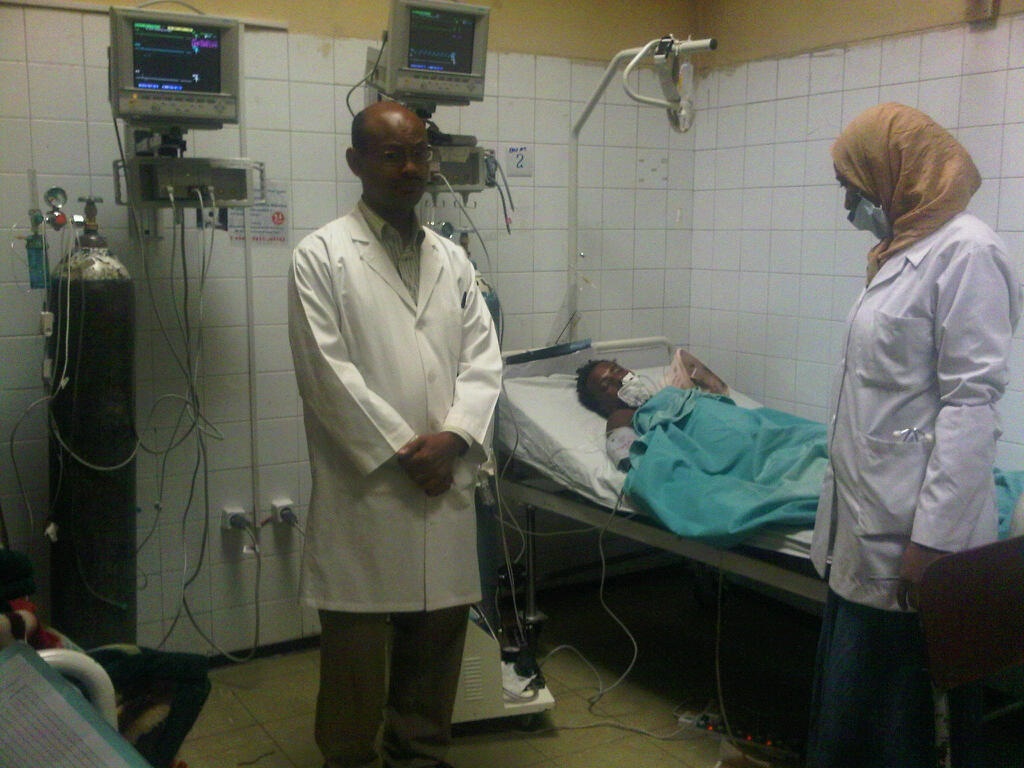
New technology for the Emergency Room is now in use.

I first visited Tikur Anbessa Hospital one year ago to work with colleagues from the hospital and Addis Ababa University.  My partners are exchange fellows with UW-Madison, and we are working together to develop healthcare quality improvement efforts in the hospital.  These are some of the most talented and well-trained health professionals  in the country, and I have had the privilege of  collaborating with them through shared work and study in both Madison and Addis for the past two years.

The Hospital, whose name means Black Lion in English, is a large public hospital and faces the problems you would expect in a sprawling African city with a high rate of traffic accidents.  This hospital receives those trauma patients, and serves as a referral hospital for the more difficult cases seen in other hospitals, ranging from emergency obstetrics, to pediatrics, to multi-drug resistant tuberculosis to HIV/AIDS, to advanced cancers.  So just about everything is happening here….

There are visible changes since my last visit.  Last year the pediatric emergency ward was really in disrepair and creating very challenging con!ditions for health care providers, patients and their caretakers.  There was talk that a new pediatric  was in the works.  As several people described it to me,  I looked at that patch of ground they were pointing at, trying to imagine the new building, and worrying that this “six month” project might take years…. Well, the good news is it did not take years!  I peered into the windows this afternoon!  It is nearly finished with the ribbon cutting soon (maybe this week?) and patients will be moved from the temporary ward early in 2012.
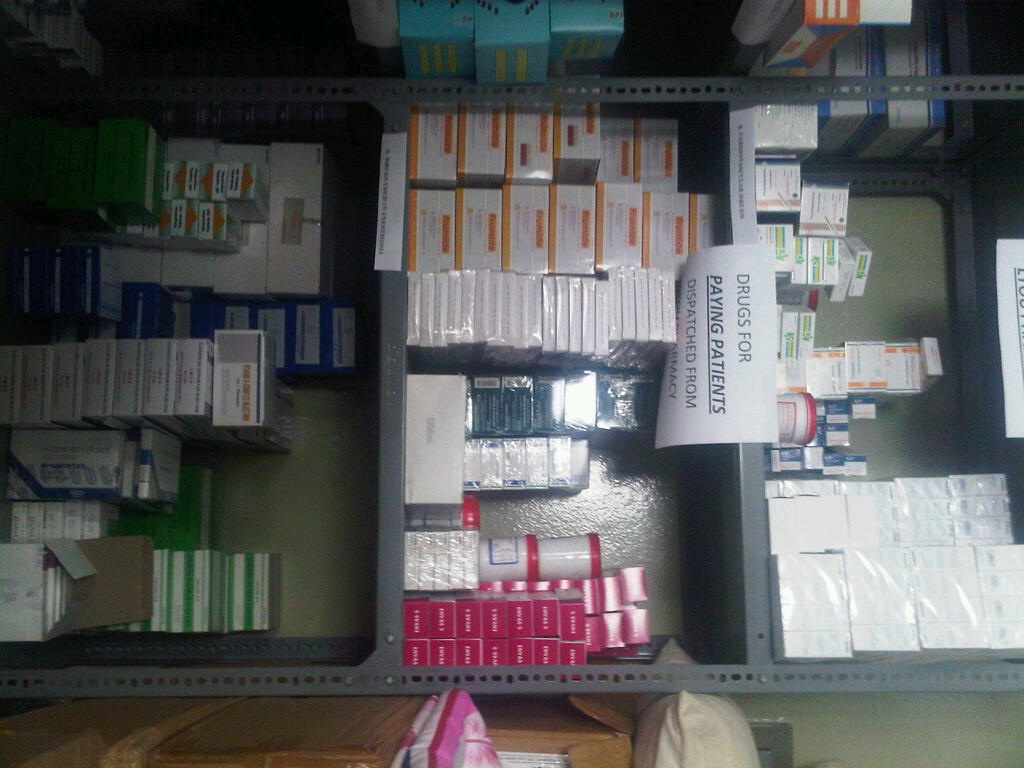
A 24 hour pharmacy is now in place in the ER.

The other wonderful development was hearing about how the QI program is moving forward and maturing.  There was no building to point to, but as I sat at the table with my colleagues, who shared their successes and honest appraisal of the things that had not worked, and how they would keep trying new strategies,  I realized that the reality of what they had  “built,” terms of improved care was just as impressive.  They have developed and implemented a functional triage system and are sharing it with other hospitals.  They have made huge strides in infection control.  While we can’t see the cases of infection that have been prevented (always a problem for successful prevention programs!),  the cleanliness is evident on the wards in the adult emergency room, and plans are in place to replicate this in the new pediatric emergency ward.  They are also improving drug distribution in the hospital (imagine yourself in one of the beds and then think more effective treatment and better pain management), and are improving a number of registration systems that will lay the foundation for better information for case management and planning at the ward and hospital level.  In addition to all the projects, they have developed their own capacity to train others and, appropriate to their role as a national teaching hospital,  they are looking toward sharing experience and skills with other hospitals around the country.

One of the really special aspects of this project is that it is a Twinning Program, (see www.twinningagainstAIDS.org),  which means that we work through mutual partnerships and exchange.  It is  really joyful to walk the grounds of the hospital, and see the familiar faces of the fellows who have shared experiences with us in Madison.  In addition to being part of the valuable medical exchange,  we have walked the Lakeshore Path together, and some have visited my home.  During one visit the  fellows experienced snow, and another visit coincided perfectly with the peak of tulip season, so we skipped out of class to visit a local tulip garden!  This week  I am on the other side of the Twinning the equation– in my visits to Ethiopia I have begun to experience the beauty and hospitality and incredible history of this country, and I hope to return many times myself, and with my family.

Everyone gets their daily fix of hope and inspiration in a different way I guess, but for me today it came from revisiting this hospital, and seeing what is needed, what is happening, and what is possible.  It was a visceral  reminder to me that small changes matter. Perhaps we don’t have to develop complex   plans  to  “scale up change.”  I don’t want to scrap that idea entirely because it is the  topic of the talk I am supposed to give at the ICASA Conference next week (!), but I am beginning to believe that the most important thing we can do is to let the reality and possibility of the tangible changes that are within our reach capture our imaginations, befriend us, get out of control, and enable us to work together to change the world around us.

I will be heading off to Ethiopia the day after Thanksgiving to do some teaching for the American International Health Alliance (AIHA).  That should be an interesting exchange related to quality improvement in health care, and I will be working with partners from Ethiopia.

I am also going to attend the 16th Annual Conference on AIDS and STDS in Africa (ICASA).  I”ll be involved in two sessions, one about quality of care and one about care for orphans and vulnerable children. I expect to learn a lot about HIV/AIDS and the most current issues and challenges.  (See ICASA website http://www.icasa2011addis.org).

While in Addis I have also arranged to visit some sites related to my work with Save the Children.  I’d like to identify a community to participate in the Wisconsin Without Borders Marketplace.  The hope is that we can support a community micro-enterprise effort designed to benefit vulnerable children (due to AIDS or other causes) by buying and reselling their products — scarves, jewlery, baskets — these are some of the crafts that I expect to find.

A few friends and students have suggested that I cover my field work and the conference on my blog www.globalhealthreflections.wordpress.com  so that I can share what I am learning with the UW community, especially our growing community of global health students. Please feel free to visit and see my posts about previous trips to Ethiopia.  And sign up to follow the blog if you want to get updates by email!

Meeting author Sonia Nazario during her recent visit to UW Madison

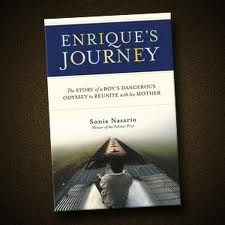
Since I  had worked with children in highly vulnerable situations in Honduras, the same country where Enrique’s journey begins, I was especially  interested to meet Sonia Nazario, the author of  Enrique’s Journey, when she came to UW-Madison on October 27th to talk about her book, the 2011 GO BIG READ.

Born to immigrant parents in Madison, Wisconsin (!) Nazario came of age in the dirty war in Argentina, and has spent many years of her life covering social issues as a journalist.   I felt humbled by the extent to which Sonia put herself at risk so that she could accurately tell the harrowing story of Enrique’s journey from Honduras to the United States to find his mother.  As she explained the many safeguards she put in place before she travelled by bus across dangerous borders, spent time in communities rife with social and political tensions, and rode on the tops of trains (students, please don’t try this at home!),  it was clear that she had been brave and selfless. She was also honest and self-critical about some of the harder truths about fly-on-the-wall journalism  –it is your job to watch the suffering play out, and, unless someone is in imminent danger, you offer no help.

The next day I met Sonia at a luncheon with a group of my students who were reading the book for an honors seminar. When I told  her that I had lived in Honduras and worked with orphans for two years, she wanted to know what I thought about children like Enrique.  What should we do?   It impressed me that several years after publication, this prize-winning author, who had already done such thorough research, was still at work on the story, asking questions rather than giving answers, wanting to get it more right.  She asked me to make public-health oriented suggestions for the “how to help” section on the Enrique’s Journey site http://www.enriquesjourney.com/howtohelp.html.  There are already some great ideas there, and I am looking forward to working with my students to contribute more!

I did not expect Enrique’s story to move me as it did. The book was covering terrain that I had lived, in a place that I once knew well.   The story of his family of origin was sad and authentically told, but familiar to me.  Like Sonia, I was aware of and disturbed by the family life patterns that are emerging with our global economy, in which domestic workers from many countries come to sweep floors and rock babies in the US, so they can send money home.  But the visceral realities of Enrique’s journey and crossing stopped me cold. The hunger and thirst, the raw cruelties and occasional kindness, the feeling of being hunted. Even I, having lived in Central America, did not know the extent to which children are wandering alone, preyed upon, in places that we are unable to even police.

Sonia Nazario has taken us on Enrique’s journey so that we can understanding the suffering of immigrant youth who make the crossing the way he did. It would be a mistake, however, to read this book as a background piece on Central American immigrants in a “this is their story” kind of way.  Such a reading would be a misuse of a well-written, well-researched story and a denial of the human complexity behind every story.  Enrique and his family are not a prototypes — they are people.  It would be an over-simplification to assert that mothers who are in the US working have all been forced to choose between raising their kids in garbage dumps and migrating  for work. It would be naive not to recognize that it is possible to both run toward love and flee from abandonment at the same time, and I think that is what happened with Enrique.  Some immigrants “go north” because they are desperate, some do it because they are dreamers, and some are both of these at once.   To address the suffering portrayed in Enrique’s story we have to address the root causes of the problem.  While poverty is a primary driver of migration and should be addressed,  substance abuse, unintended pregnancy, family violence, unequal status of women, and the breakdown of the extended family all impacted the lives of Enrique and Lourdes.

Enrique’s Journey, which Nazario describes as the story of one boy, one mother, and one train, is a call to action on behalf of all children in this situation.  I hope that for students at UW-Madison, this Go Big Read is the beginning of another kind of  journey, where they both act on what they learned from this book, and continue to read and study and live in ways that allow them to continue growing in their understanding of issues related to the well-being of children everywhere.

On September 22nd, after 3 years of writing about it, talking about it, and trying to walk the talk, my UW-Madison colleagues and I launched our global service learning program, Wisconsin Without Borders.  What’s the big deal, some might say. Aren’t their already Doctors without Borders, and Engineers without Borders?  The answer is yes.  There are also teachers, lawyers, architects, nurses, sociologists, builders and acupuncturists. I had planned to end this post with the idea of starting a Clowns without Borders, but they are already active, spreading laughter and joy.  And the Knitters without Borders are making blankets and sweaters and sharing their dyeing and design techniques. I tried everything to find a new idea, but struck out again and again….Bloggers, Dentists, Geeks, Monks…they are all out there, without borders.  I stopped playing fair when I found a web reference to Mariachi without Borders! Cynically, I searched for Fence Makers without Borders. That would reveal the hypocrisy, show that the term was losing its meaning, would it not?  But the Without Borders world held, there are no Fence Makers without Borders, at least not yet….

Why do so many of us want a Life without Borders? What are we trying to say about ourselves?  Perhaps simply that we are open to the world.  We like to travel.  We want to make a positive difference in the world, to be part of the solution, at least for a moment.  But there is some kind of poetry at work here also. The phrase evokes the wild beating heart, a sense of freedom, sunlight, a loosening of chains.  It expresses a desire for union with people who are different from us, it says we are willing to risk ourselves to explore the differences, celebrate them, and watch them dissolve.

Even now, when there is so much need for healing in our own communities, my students and colleagues and I are finding a lot of support for the idea that reaching beyond the boundaries of our state is both a duty and a privilege.   Our students can be global leaders, they can act both locally and globally to promote justice, human flourishing, and care of the earth.  Our event featured 13 projects from around Wisconsin and the world that are inspired by the “Without Borders”  spirit.  Posters can be viewed at: http://centerforglobalhealth.wisc.edu/389.htm

You can see my brief Intro Remarks Explaining Wisconsin Without Borders  (Hi Mom!):

www.youtube.com/user/MorgridgeCPS#p/u/14/QnbZNOoO-SU

Also, see one of our student leaders, Megan Hall, talk about our Women’s Health and Microenterprise Program in Ecuador:

http://www.youtube.com/user/MorgridgeCPS#p/u/13/cmiTyv5HtHM

The program also featured remarks by John and Tasha Morgridge, who have generously supported The Morgidge Center for Public Service for the past 15 years, and Bob and Sara Rothschild, who presented their work in Botswana, where they are working with communities to build public libraries. Their presentations and the entire event can be viewed at http://www.youtube.com/user/MorgridgeCPS

To blog or not to blog?  For me that wasn’t even a question!  As a life long diarist, I believed that the best place for my private thoughts was  a notebook tucked between my mattresses.  Blogging seemed narcissistic –all that living out loud seemed to contradict everything I believed about the inward life, the importance of the unobserved moment, the value of words in ink on paper–just one original that can be hidden or crumpled or burned.  You can even write in code, which I did for the better part of 1979….

Why would anyone trade the raw authenticity of journaling for the prettified blog, that revises as it records, and distorts as it edits. I held my travel journals close to my chest…. Blogging seemed like a recipe for self-deception and vainglory.  (Would I ever say vainglory in a journal?)

So why am I here now, blogging, imagining you?

It began when (Oh God I just found myself making something up … luckily I caught myself and deleted it) a colleague asked me to blog at a Global Health Conference over a year ago (see September 2010 posts).    I didn’t dislike what I wrote, and I found that a number of my students had followed and enjoyed the blog… I did a mildly clever one where I pretended I met Bono, and people got it.  I found that I was more focused in the conference sessions because I knew I had to blog about them.  And when I nervously pressed “publish” for the first time, I realized that accountability comes along with the admittedly “selfy” act of blogging.  I began to see that there is discipline and courage here too.

During the course of the following year, as I wrote in my journal about my global health work in Ethiopia, Ecuador, and Mexico, it occured to me that some of those entries, as well as older travel journals and  more local reflections, might be worth sharing if I had a blog. I was learning through the writing, challenging myself, and sensing life more fully.  I realized that if I could muster up the courage to let others read and write along, my writing had the potential to create a voice and space for the people and places and issues that I care deeply about.

Can I combine the rush of blogging with the introspection and raw truth of my journals?  Probably not.  But I can try.  I can share my experiences and honest reflections with family, friends, students, and even readers who I don’t know…  I can try to blog like there’s nobody watching.  Of course I know the reader is there, and because of that I will polish and edit and censor a bit (not a bad thing, actually),  but I hope always to write  (almost split that infinitive, but no, not here!) with my whole self, whatever that means and whatever the cost.

We all carry so many identities, and we don’t always realize the cost of keeping them separate and expressing them selectively.    As a writer-teacher-learner-mentor-mother-wife-daughter-sister-friend-seeker, I want to explore what it means to speak from the core of my whole self.  In spite of the fact that my three children have forbidden me to blog about their lives (and I will honor that within reason), the well-being of the world’s children, beginning with my own, but by no means ending with them, is my life compass.  I blog to better understand what this all means.  I have this foggy notion that if I try to blog out what I believe I may actually behave better….

I hope that I can be a witness to beauty and joy, and I hope I am kind and generous in my words.  I may also get angry about suffering or injustice, and speak uncomfortable truths about myself and my world.

In case you are trying to remember the rest of that quote about dancing, and you don’t already own the T-shirt, here is the full text:

“You’ve gotta’ dance like there’s nobody watching,
Love like you’ll never be hurt,
Sing like there’s nobody listening,
And live like it’s heaven on earth.
(And speak from the heart to be heard.)”
-William W. Purkey

NCDs: The Silent Killer in Low-Income Countries

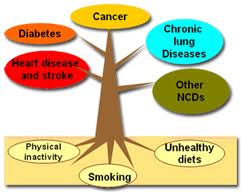
Don’t smoke.  Drink in moderation.  Eat right.  Exercise….  Many of us have, at one time or another, written such messages on a post-it note and stuck them to the bathroom mirror…but what just happened at the UN Summit on NCDs is bigger.  This was only the second time a UN summit addressed a health topic, the first topic was HIV/AIDS, and now this second summit addressed non-communicable disease.  The meeting achieved broad consensus that we must address these “big 4” causes of NCDs,  and laid out priorities and strategies.  It also described what  global NCD partnerships might look like –shared learning rather than large-scale donor funding from rich countries to poorer ones.  Some participants were disappointed that the meeting fell short of defining targets, indicators or criteria for progress.

This CSIS video summarizes the meeting well, featuring Nils Daulaire,  Director of the Office of Global Health Affairs at HHS,  Ambassador Ebrahim Rasool  (South Africa), and Medtronics Senior Executive, Trevor Gunn.http://bit.ly/pZP8ti

The resolution, which was passed at the summit,  is actually a great read!  http://bit.ly/qmouea.  It gives an overview of the global epidemiology of non-communicable diseases, discusses causes, advocates a whole of government approach (South Africa, in particular is walking this talk) and gives a concrete sense of what good policy might look like.  It recognizes the need for health system strengthening, and the global importance of anti-tobacco efforts (like smoke free workplaces and cessation initiatives that use text messaging), and it includes guidance about food systems, advertising, healthy environments.  It’s all there, and I have a feeling that it will be as challenging to implement this agenda in the US as in some of the lower-income settings.  The global effort will target  cardiovascular disease, cancer, respiratory illness and diabetes, focusing on four drivers — tobacco, alcohol abuse, poor diet, and physical inactivity.  There was and will continue to be tension and debate around balancing prevention  and treatment.  The CDC will serve as the point organization in defining this along with WHO the FDA,  NIH and others.

In attendance at this high level meeting was Dr. Jim Cleary, an international expert on pain policy, and the UW-Madison Global Health Institute’s Special Advisor for NCDs.  See his blog at  http://painpolicy.wordpress.com/.  In conversations at UW-Madison, Jim has challenged us all to think comprehensively about care for NCDs,  and remember that the lifetime death rate for human populations is 100% and holding steady!  Everyone dies, therefore, in addition to thinking about prevention, we must also think about what it means to have a healthy death, and that means compassionate care and pain management for all.   This one is for you Jim———>

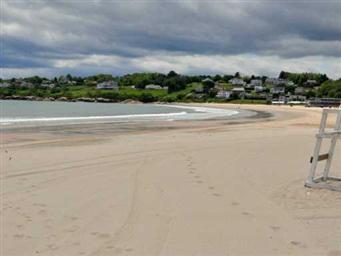
Normally I blog about faraway places, but I am thinking of the peaceful shores of my childhood today. Apparently Irene caused 8 foot waves at Bonnet Shores, RI. Children of the 60’s from Rhode Island do not actually remember Hurricane Carol or Bob, but many of us feel like we do because of the stories our parents and grandparents told us.  The details of Bob and Carol and the New York blackout may get jumbled in our minds — Nana was stuck on a train, right? Or maybe that the time that we all got snowed in and Papa played the harmonica — but we live in the shadow of  “the great gales” as an overall gestalt.  It is knowing that everything can get washed away.  It is also knowing that this usually doesn’t happen…. except once a generation or so, when it DOES happen.

Some Rhode Island hurricane stories: http://coventry.patch.com/articles/a-history-of-the-gale-rhode-islands-brushes-with-mother-natures-fury-2

Will Bonnet Shore and our house wash away?  I don’t really think so.  But this possibility is EVERYWHERE in the news (just got a concerned note from a young colleague in Ethiopia who is worried about my family!!!), which makes me remember the little things. Opening the house each summer, washing curtains and baseboards and windows.   The sensation of floating in bed after  jumping the waves all day.  Taking family photos beside the pink flamingos!  And the time my sister and I tried to make fossils by burying a dead fish between two pieces of slate. Nana waved goodbye from the porch and always seem to be wearing red.

Of course, it was not all fun and games. Sometimes my sister did not want to play with me, or it was too cold to swim. Then I would follow my mother around, go to the beach to collect shells and rocks, brood. Sometime in my 10th year I decided to toss my ashes here, off Bonnet Point.

Years later I would walk the beach with my own babies (now teenagers) in my arms.  They play with “the cousins” on the same rocks.  The minnows and hermit crabs they catch are very likely descendants of the ones that I caught 30 years before. It can seem that none of this will ever change.  But, Irene aside, I know that larger life forces like time and wind and rain will come into play eventually.

The house is being put up for sale, my parents can’t manage the upkeep anymore.  My firstborn will go off to college soon.  We will treasure memories of this beach, jumble them …. walk other shores together and separately.  I feel a huge wave rising inside me… But now they are saying that Irene is milder than she seemed.  People are coming out of their homes, walking along Narragansett Pier.  So never mind about all this, the storm has passed.

It looks like we may get to spend one more summer at the beach….

Posted with love from the land of tornados…. Hope everyone stays safe!

Low-Tech Solar “Liter of Light”

Ethiopian Masinko and other Traditional Instruments

I made it home from Ethiopia yesterday. It was a wonderful trip in so many ways.  I was so busy and with the time change and limited internet access I did not have a chance to write the usual news from the field to family and friends so I thought I would do so here now while everything is fresh in my mind.

I have been to Ethiopia before, so I had a good sense of what to expect and I knew it was a very interesting and hospitable culture.  However,  all the good expectations were doubled by the fact that I already knew 8 of the Ethiopian colleagues that we were working with since they had had fellowships at UW, and because the QA advisor working with me, Roman Aydiko, a UW-Madison student who I really enjoy working with, is from Ethiopia herself.  We trained 60 hospital leaders in quality improvement and followed up on 8 projects that were already underway. There has been good progress on all the projects but two have been very successful, one related to infection control (improvement from 33% to 69%)  and one related to fully implementing triage (from less than 10% to 100%).

The Black Lion Hospital is the largest hospital in the country, and serves the most serious cases and has the most active emergency department.  We are working with the emergency department and the pediatric emergency departments in particular.  During my first day I visited those wards which I have been hearing about for months.  I think you can imagine that visiting these sites is a powerful experience, with such serious resource limitations and lines of patients hoping to get care.  The health care providers are among the most talented people in the country –chosen for medicine because of their intellectual abilities.  It is hard to see them struggle to provide care in a ward where water systems for basic sanitation are not always working and there are shortages of basics like sheets, gloves, face masks, etc.  Roman and I brought 4 suitcases full of sheets and gloves and masks and hand sanitizer as a gesture of solidarity.  We thought this made sense because we know the hospital is working to get these things in place so jump starting them on something like sheets helps — they can manage replacement as they wear out etc.  We also brought scrubs which they were delighted with because they can use them as uniforms.  It was a very joyful thing for us to give them things that we know will be put to immediate use.

In addition to working very hard I got a chance to get a feel for Addis Ababa.  I went shopping and really enjoyed buying some beautiful scarves, wonderful Ethiopian coffee, and a drum and masinko — two traditional instruments.  I also visited the national catherdral and an old orthodox church.  Spent time strolling around Addis which is a really nice African City — so much that is ancient right along side modern buildings and city bustle.   In addition to eating great Ethiopian food every day at lunch time we also went to a traditional ethiopian restaurant that had all kinds of cultural dancing going on during dinner.  I loved the food and music and dancing!

The other wonderful and unexpected aspect of my trip was that two very good friends from the DC area  happened to be there.  Tessie and I had worked together and spent lots of time together when our children (now in high school) were babies.  Marie Eve and I had shared some very important work related to vulnerable children but we had lost touch -what a gift to reconnect with her.   She is now working for Save the Children and we enjoyed reconnecting as friends.  She, Tessie and I are hoping and planning to do more work for vulnerable children together  in the near future.

There were extremes to digest in all this as you can imagine.  It was quite something to be working in solidarity with the mothers in line at the pediatric ER by day, and dining at the what is reputed to be the best Italian restaurant outside of Italy with old friends in the evening!

One thing that has always bothered me about development assistant projects (and I have worked on many) is the way the money flows, as they are very strict about procuring items on the local economy, yet they give very generous allowances for hotels and lodging.  I decided to deal with this by using the food allowance for a local cause, and then I can buy my own food, which I would have had to do at home anyway.  A girl’s gotta eat, right?   I shared my plan with Roman who, through her Ethiopian network, knew a very worthy young man who is trying to get funds together to pursue a masters in development with a focus on environmental sustainability.   He is very smart but “behind” some of his peers because he had to help raise his 8 siblings before he could consider this.  He still has lots of family responsibilities, but is getting started with his studies.  I am using the food money that I got for the week to help him out (in installments with reports from him) and I am also going to find him an academic buddy at UW who has similar interests. We met twice during my visit and he is so appreciative of the help and so hard working and deserving. And the only cost to me is a cleaner (but not totally clean) conscience about how development assistance money is used.

This trip was full of things that I expected and I did not expect, both named and unnamed here.  I am considering it a message from the universe about my life and what I am doing and what I should be doing.  Unfortunately, I cannot actually decipher the scroll in my hand !   I am hoping that continued reflection and finding the right balance between planning  and being open to life will help me find out what it all means …

It was great to get home where job one is to decorate for Christmas and make a big pile of potato gnocci for my family!

Based on email December 2010.

This is a great read by a UW Madison professor!

This intimate and richly contextualized study of medical education in Malawi paints a vivid picture of how western medicine is being taught, internalized, adapted and owned by African medical students and physicians. Wendland begins by describing the role that medicine has played in Malawi’s history; the detailed and nuanced picture provides the reader with a deep understanding of a particular African reality, as well a framework for viewing the role of medicine in other African settings and globally. Wendland follows the students from their villages and and preparatory schools, through their academic training, and on to their first days of service in African hospitals. This journey provides insight into how the students experience the promise of medicine, as well as it’s shortcomings, and also shows how they bring their own history, culture, and life experience to their medical practice. The work is further enhanced by first person narratives of the medical students recorded during their training and early years of practice, as well as several case studies of patients that illustrate the fullness and power of viewing health and disease through an anthropological lens. Wendland’s evocative prose and unflinching self-awareness complement these other elements, making “a heart for the work,” an example of medical anthropology at its best. — L. DiPrete Brown, October 24, 2010