Category: Around the World & Back Again


CYMCTW

On  May 14th and 15th  the UW-Madison Global Health Institute and the Center for Investigating Healthy Minds engaged with the Dalai Lama and an interdisciplinary group of global thought leaders to explore the potential contributions of  mindfulness meditation to sustainable global health.

We hosted two incredible panel presentations at Madison’s Overture Center and both sold out –  for those who could not be there or follow the live webcast, you can view recordings and transcripts of both programs at Change your Mind Panels.

All the presentations spoke to me in different ways.  Here are some highlights:

Chade MinTang, Google’s leadership coach and “jolly good fellow,”  told me that devoting 10 seconds every hour to compassionate intentions would change my life. I am definitely going to try this!

Richie Davidson, famed UW researcher, presented his research which convinced me that 30 minutes of daily mindfulness practice could help me to reduce stress, reshape my mind, and make me more compassionate.

Richard Layard, the economist co-author of the  UN Happiness Report, counselled me not to measure my happiness by how much money I make – We need to find a more sensitive instrument than gross domestic product, and he thinks a meaningful happiness index is possible.

Don Berwick, pediatrician and healthcare quality expert, shared some unsettling truths about health care –despite the medical miracles that can cure cancer, the system is not operating efficiently or equitably, and the high costs are keeping us from making other important social investments.

Dan Goleman, author of the best-selling book Emotional Intelligence, focused on, well, focus.  If you are not present to the moment, it will be hard to be compassionate and act on what you believe.

Ilona Kickbush, global health policy expert, shared a holistic view of health and well-being, and urged us to work toward health through all sectors of society.  Her leadership on the panel was wonderful, but she correctly pointed out that one woman’s voice is not enough in discussions like this, and she reminded us that we will all need to have the courage to speak truth to power if compassion is to be the dominant ethos in our world.

Jonathan Patz,  UW climate change expert and Global Health Institute Director, illustrated the importance of holistic approaches to sustainable global health, with an example from Borneo, where a well-intentioned plan to prevent malaria by killing mosquitoes rippled through the chain of life in a village and caused all the roofs to cave in.  It would have been a wonderful fable if it were not a true story!

Mattieu Ricard, a Bhuddist Monk reputed to be “the happiest man in the world,” reminded us that training the mind is truly possible.  Mental discipline can help us to control the impulses, ruminations and cravings that lead to appetites that function like harmful addictions, where we experience wanting without enjoying.

Ariana Huffington pulled the themes together, reminding us that we live in a unique moment, and that these powerful ideas can really make a difference. She also encouraged the audience to explore GPS for the Soul, which allows people to monitor stress and address it with relaxation and mindfulness techniques though a cell phone.  See Ariana’s instructional video here:  http://huff.to/YXRlil.

But what about the Dalai Lama himself?  What was it like to be part of a conversation with him?  What did he say to me?

CIHM CMCWThe Dalai Lama sat in a high back cushioned chair, wearing a Wisconsin cap, on the Overture Center stage before a crowd of thousands. It was like being in the presence of a wise, honorable grandfather.  He laughed at his own (clever) jokes and recited profoundly simple truths about compassion and peace.  He said we should all get together to save the planet.

The format dictated that the global scholars from  various fields would share their ideas for the Dalai Lama’s response.  He affirmed the wisdom of what they were saying, and encouraged them to go out into the world to tell others. He was expressing complicated ideas in his second language – which led to over-simplification at times.  In preparation for the event I had read speeches and teachings of the Dalai Lama (for a great collection by topic of interest see HHDL Teachings), so for me, his sometimes staccato statements evoked his written works and were meaningful.

By the time I took my seat for the second panel, which was intended to be a similar but not identical presentation for a second audience, things were pretty familiar. The Dalai Llama sat across from me on his chair, the audience was quieter somehow, and I was able to pretend we were in a living room together, engaged in conversation.  As time went on his comments were less like direct responses, and more like reflective holistic comments on how we might advance global health and well-being.  I leaned in, now we were getting somewhere!

He affirmed the role of science in changing the world, and made it clear that he espouses secular morality as the appropriate guide for global change.  Even though he is a religious leader, he relegates religion to the personal realm, and he feels that there is a common core of shared moral values that transcend particular religious or secular traditions. He wanted to be very sure that we understood that he was using secular in a way that was neutral to religion, and not anti-religion, and he also wanted us to know that he was including people who consider themselves atheists as members of this secular moral community.

He reminded us that the brain and mind are not one in the same!  He spoke of eye consciousness, of ear consciousness, of the power of full presence in physical labor  — planting a garden, washing a dish, singing a song  — these can all be sacred contemplative acts.  The mind should not be reduced to brain function. The way I heard it he was suggesting that there is still some mystery to human identity and will….

He insisted that it is very important to include the voice of the poor in the conversation about sustainable global health.  Environmental challenges and suffering due to poverty need to be addressed by all together, as one human community of 7 billion people. The architects of change must include the poor and vulnerable.  That is what he said.

He had mentioned education many times in the morning session, but in the afternoon he got to his point:  He feels strongly that education must go beyond imparting knowledge to cultivating morality.  He said, “the moral voice cannot be silent.”  And mindfulness practice and ethical training have important contributions to make to education.

He also spoke of peace and disarmament and stated that he is truly saddened that people use their talents to kill.  He focused on those who make bombs and guns, but this perspective extends logically to other kinds of products that kill, like cigarettes, and has implications for all endeavors that lead to the destruction and degradation of the environment through contamination, resource depletion, or the extinction of species.  To quote the Dalai Lama verbatim, “We must take more serious care about mother planet.”

Overall the events inspired me to rededicate myself to my contemplative practice as a Benedictine Oblate.  I would like to cultivate a more direct feed between the compassion and loving-kindness that I feel, and my actions. I look forward to continuing the “Change Your Mind” conversation, and I hope to discuss these ideas with more depth and rigor, and to include more voices.  To that end I would love to hear comments from others who were at the event or who have been part of the conversation through the transcripts or videos.

To continue this conversation or learn more about global health please visit my blog, Global Health Reflections at: https://globalhealthreflections.wordpress.com/about/

Lori DiPrete Brown

collage_sponsorship

IT’S ABOUT COMPASSION AND IT’S NOT TOO LATE TO JOIN US!  

Mark your calendars for Wednesday, May 15, 9:30 am (CST) OR 2:00 pm (CST).   That’s the time to be still, take a deep breath…. and join in a conversation about compassion and mindfulness.  We’ll explore how these practices can help us to be more healthy and happy, to be more effective as leaders and public servants, to create healthy communities, and achieve sustainable global health for our earth. We’ll hear from UW-Madison scholars and global thought leaders who are exploring the policies and practices related to global health and happiness.   LIVE BROADCAST at the HF Deluca Forum in the Wisconsin Institutes for Discovery (Free of Charge and Open to the Public).   LIVE WEBCAST  via www.cmcw2013.com.

Don Berwick, health policy and health care quality improvement expert, and Ilona Kickbush, known for her leadership in championing a “Health in all Policies” approach to health, will talk about how we can improve health care and employ broad governmental and whole of society strategies to support true well-being.  Richard Layard, economist and co-editor of the 2013 World Happiness Report, will provide economic perspectives on how happiness and well-being might be measured. The conversation also includes Dan Goleman author of Emotional Intelligence and ECO Literate, and Chade-Meng Tan, google’s official “jolly good fellow” who wrote, Search Inside Yourself .  These experts will talk about how mindfulness can enhance leadership skills and organizational performance. You will also get a chance to hear from Mattieu Ricard, reputed to be the happiest man on earth. Ariana Huffington will moderate the discussion, sharing her own perspectives and insights as well.

Mindfulness? Compassion?  You might be asking yourself if this stuff really works…. UW-Madison’s world renowned neuroscientist Richie Davidson, who directs the Center for Investigating Healthy Minds, says yes, and he will be sharing the latest research on what sciences tells us about the relationship between mindfulness and well-being. Then Jonathan Patz, who leads the UW-Madison Global Health Institute, will make the link to climate change and human health, and discuss how we can take actions that positively impact both.  His Holiness the Dalai Lama will honor us with his presence for the event, and will share his reflections and reactions as the conversation unfolds.

I will be blogging and tweeting (ldipretebrown,  hashtag: #CMCW2013) during events on Monday and Tuesday, and I invite you to follow me and comment below.

DownloadedFile-13

On April 13-14 Unite for Sight hosted its 10th Annual Conference on Global Health and Innovation.  Participants representing 50 states and 50 countries gathered on the Yale Campus to share ideas and experiences related to social entrepreneurship and global health. I have been to a number of global health conferences this year, but this one gets highest marks for new ideas and energy. This is a great gathering for students, scholars and innovators!

img-article-verghese-rosenberg_161652666543

Tina Rosenberg gave the opening keynote, drawing on insights from her recent book, Join the Club: How Peer Pressure Can Change the World.  Identifying behavior change as a major public health challenge, Rosenberg challenged the conventional wisdom of public health approaches that provide sound, evidence-based information about behaviors such as drinking, smoking and poor eating habits.

The problem with public health experts, said Rosenberg, is that they have no idea how non-experts think..

Rosenberg went on to outline some key communication principles that have many implications and applications to Global Health.

  • Focus on motivation, rather than a flood of information.
  • The best messenger is “someone like me who has made the change.”
  • Marginalize unhealthy behavior –don’t emphasize the magnitude of the problem.
  • Tell people about their peers who have adopted the positive behavior.
  • It helps to support change by having a mentor AND being a mentor.
  • And Finally –small groups are powerful engines for behavior change!

DownloadedFile-14

We also heard from economist Jeffrey Sachs, Director of the Earth Institute at Colombia University and author of The End of Poverty. He talked about the amazing promise of information technology for global health – ehealth, mhealth, smart phones, dumb phones, GIS systems – how they can all conspire to reach people with needed information and health services.  Sachs boldly pronounced that the Post 2015 Development Agenda could end extreme poverty and eliminate  hunger and preventable disease. He also encouraged us to join the club  — by engaging with the newly developing UN Sustainable Development Solutions Network (www.unsdsn.org).  Visit the site, register as a follower, and stay up to date on state of the art solutions to development challenges in 12 thematic areas ranging from health care to food systems to sustainable energy.

images-12Pediatrician Dr. Sonia Ehrlich Sachs  talked about the One million Community Health Worker Campaign (http://1millionhealthworkers.org/) for Sub-Saharan Africa. And yes, she wanted us to join the club, too! During the final 1000 days before the end of 2015 this effort (by a coalition of established global health actors) aims to put one million new community health workers into service.  These would be salaried jobs for (mostly) young women, who are given 3 months of training and ongoing supervision and refresher training.  They will be formally linked to the Ministry of Health, assuring reliable supply chains and referral mechanisms.   Here’s what the program looks like, and there are lots of ways to get involved.

1 MILLION HEALTH COMMUNITY WORKER CAMPAIGN VIDEO:

http://www.youtube.com/watch?v=_W5hns_huyY&feature=youtu.be

SAM_0808

Lori DiPrete Brown, Njekwa Lumbwe, Jim Cleary, and program leader from African Palliative Care Association.

 During August of 2012, The UW Madison Global Health Institute was privileged to welcome Njekwa Lumbwe, that National Coordinator of the Palliative Care Association of Zambia, for an exchange visit to Madison where she participated in a Pain Policy training session led by  GHI Program Director Dr. Jim Cleary.  Dr. Cleary works with leaders from around the world to develop and scale up effective state-of-the-art policies and programs related to pain management.

Mrs. Lumbwe made valued contributions to the meeting and also gained insights about the way forward for Zambia, as she learned from the experiences of 9 other countries from Africa, Eastern Europe and Asia.  Engagement with global experts and national leaders from around the world helped Lumbwe to envision policy options and implementation strategies that could be applied in Zambia.

Her commitment to palliative care defines her as a leader, and the participation in the meeting reinforced this commitment.  “The meeting opened up a whole different perspective of the global state of pain control.  I pledge to use this experience to bring out the desired change.  I look forward to stronger future collaboration,”   said Lumbwe in her report to the group.

Soon after in November of 2012, we found that Njekwa Lumbe was following through on her promises, working nationally as a change leader, and collaborating with the First Lady of Zambia to make palliative care more accessible. We look forward to welcoming Njekwa back to Madison in the future!

FLzamiba

It has been a wonderful week and a great privilege to collaborate with leaders from Zambia and Botswana ton plans to improve the quality of health and social services.  At the invitation of the  CDC-funded American International Health Alliance Twinning Program, and with the collaboration of their Zambia Country Director Ann Mumbi, I led a QI implementation workshop with a team of UW facilitators that included doctoral candidate, Jason Paltzer, and UW alumna and Global Health Institute staff member, Sweta Shrestha.

One challenging and exciting aspect of the program was that we brought together some very different types of organizations –  believing that the concepts about quality, the practical problem-solving tools, and the leadership principles would be relevant for all.  The partners in the group included the Palliative Care Association of Zambia, several Zambian teaching hospitals, leaders from ZAMCOM, which provides health communications expertise for the country, and leaders from the Zambian military health services.  From Botswana we had faculty members from an academic medicine setting,  leaders from an NGO umbrella organization that serves highly vulnerable children, and directors from two programs that do voluntary counseling and testing for HIV/AIDS.  They all worked in small group to develop improvement projects, giving each other feedback and encouragement along the way.

Did it work?  We think so ….. By the end of the week the participating leaders presented their strategic plans to each other and an audience that included national leaders, representation from the CDC, and the AIHA Twinning Program leaders.  We tried not to let the radio and TV crews go to our heads, but it was nice to see the work of the participants noted and celebrated!  Of course, this was not the end, but rather the beginning of the quality improvement efforts, since everyone hoped to go back to their organizations to carry out the planned changes as soon as possible.

While geography often conspires against us, this meeting is, thankfully, not our last time together, as many of the participants will be coming together again in July 2012 in Madison, Wisconsin to continue this work together!

Lori DiPrete Brown, Associate Director, UW Global Health Institute.

April 2012

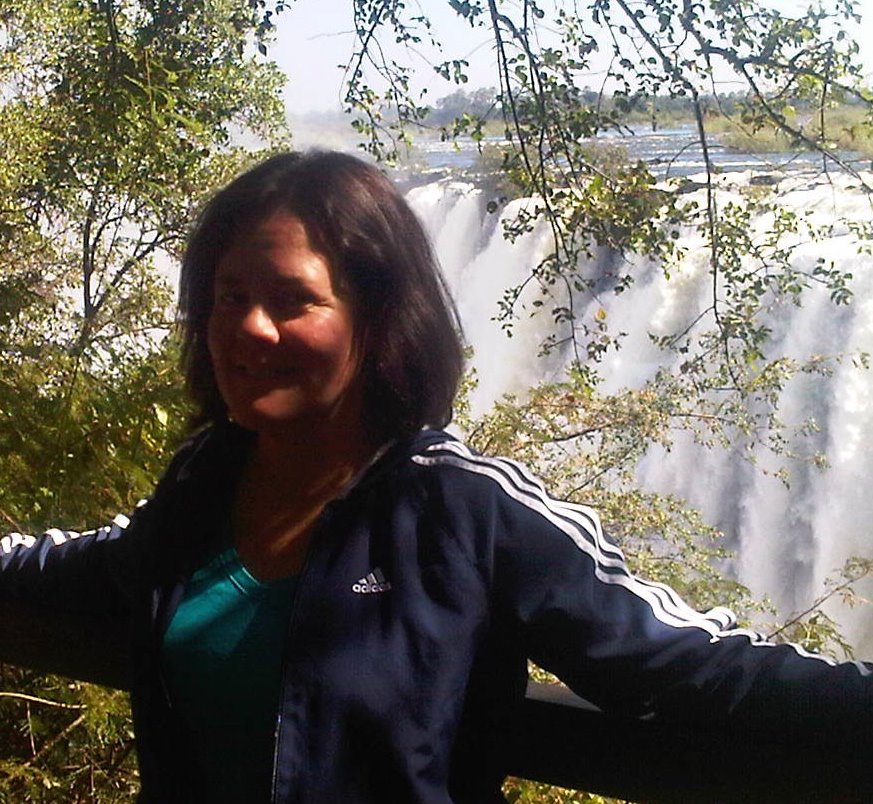
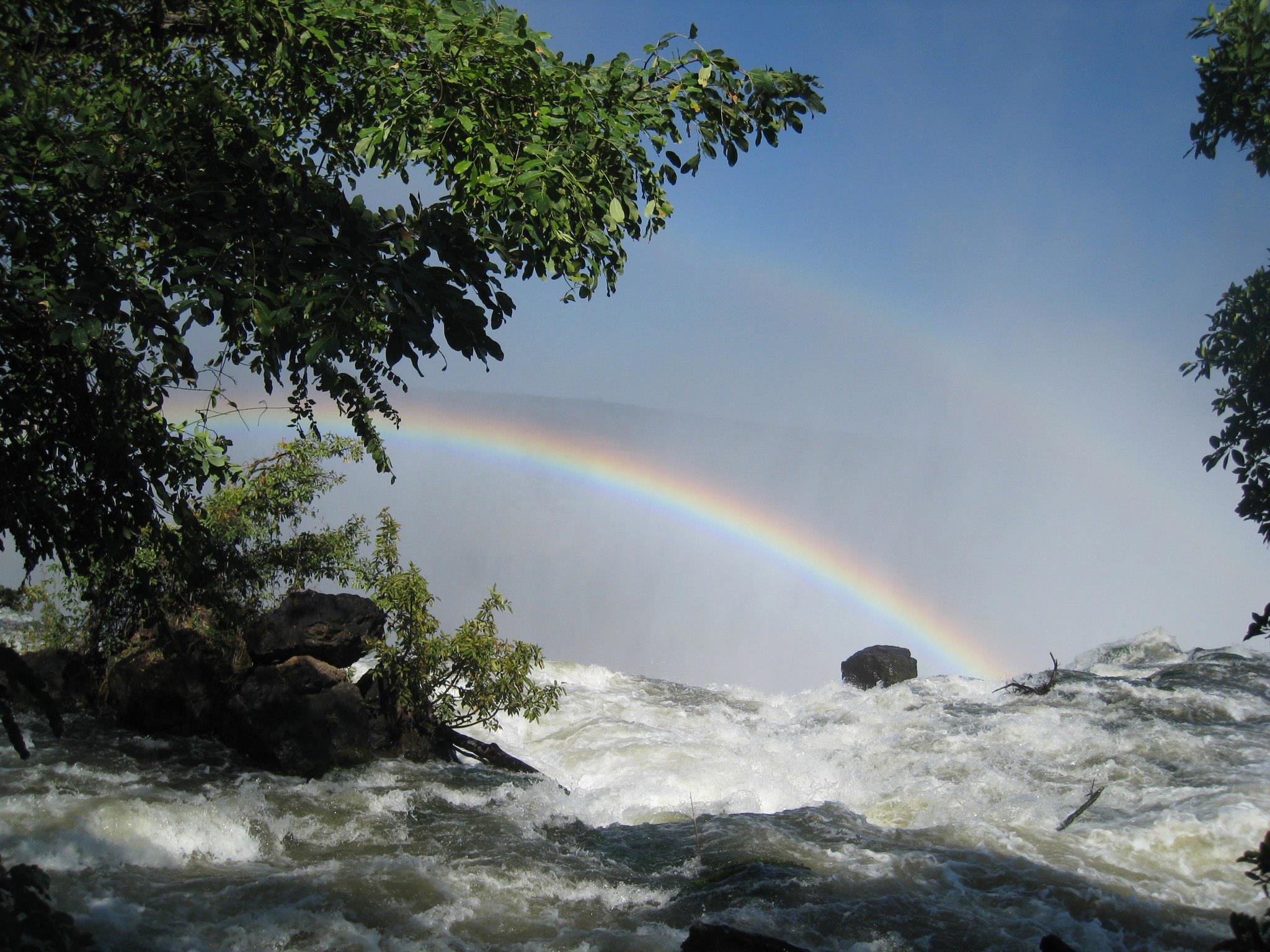
“Is that smoke,” I asked, pointing to the cloudy billows on the horizon as we headed toward Livingstone.  “No,” I was told, “it’s the mist from Victoria Falls.” In Tonga, one of the local languages here in Zambia,  the name for the falls is Mosi-O-Tunya, which means “the smoke that thunders.”  Now, as we approached from a distance, I could see why.  The falls are amazing and grand. The smoke appears first, from out on the highway before you even get to Livingstone.  Then, as you approach the gateway to the falls, you hear the force of water, a thunderous whooshing that is too strong to be taken for wind. As you walk toward the sound  you see and feel the spray, and then, suddenly, or so it seems, an immense wall of sheer gushing water.  The water force is so strong that the thick showers of water falls and rises with a bounce, with droplets breaking off and defying gravity, so that it feels like it is raining from above and below at the same time.

The rushing water, cool mists and sunny skies had me dizzy with delight.  Soon I was hoping for a rainbow, and I was not disappointed.  In fact, it seemed as if every time I asked,  the universe indulged me with colors of reassurance. So many rainbows on demand couldn’t be a coincidence!  Eventually I had to accept that miracles are ordinary and everywhere.  If you are looking. And if you remember to ask for them.

Our stay in Zambia was short, yet we had seen and learned so much.  I had wanted to see the falls, to put my toe in if I could, and now we were here.  Water in abundance,  rushing like thunder, cold sprays, powerful currents that can sweep you away.  The gift of color.  Again and again.

Hiking just above the falls we came to the still headwaters. It seemed impossible to me that I could stand so close the edge without being swallowed.  In spite of the kinetic frenzy just a few hundred feet away, the headwaters were a quiet pond.  There was so much more underneath the still current, and, I knew, so much more below the surface of this country, Zambia.

On the long ride to the Falls I had insisted that our friend and guide, Ali Sad, teach me a Zambian song.  It is an absurdly short visit, I reasoned, there will be no evidence that I was here at all if I don’t at least learn a song.  He taught me the following song/chant which is often sung when people gather.

    Nchale wo wau, nchale chi wau tu,

    Nchale wo wau, Nchale chi wau tu.

It means, loosely translated, “Everything is good.  It should be like this.”  And then it repeats, so there is no mistaking about anything, “Everything is good. It should be like this.”

Zambia — just a toe in….

“You cannot save what you do not love, and you cannot love what you do not know.”

Aldo Leopold said that, or something close, and I think of it as I enter Zambia’s Mosi y Tuna National Park to experience my first safari game drive.   It is  6:30 am, and it is cold. I am wearing a coat, I am under a blanket, and the jeep’s windows are all shut.  As Jason Paltzer, who is driving, tells us about an encounter he had with an aggressive elephant in this very park,  I am both disappointed and comforted by all the layers between me and the animals that we hope to see …. After a few moments, the grimy pane compels me. I open the window, leaving only air between me and wild nature.

Soon we see an impala.  It looks fragile, knowing.  It freezes, but then, at the sound of a camera shutter, it runs.  Its effortless gait reminds me of the way my daughter Kristen runs.  I love the impala for a moment, and then move on.  Next up is a warthog, awkward and muscular.  There is nothing beautiful to recommend this animal, yet we are taking photos and saying his butt bounce is cute. If we can love the warthog as he is, maybe there is hope for us?  We slow down for some guinea fowl who walk in the road in front of our jeep, seemingly unaware of us.  For some reason completely at odds with ornithological precision, I am reminded of Flannery O’Connor and how she loved her pea hens, and saw a map of the world in their plumage.

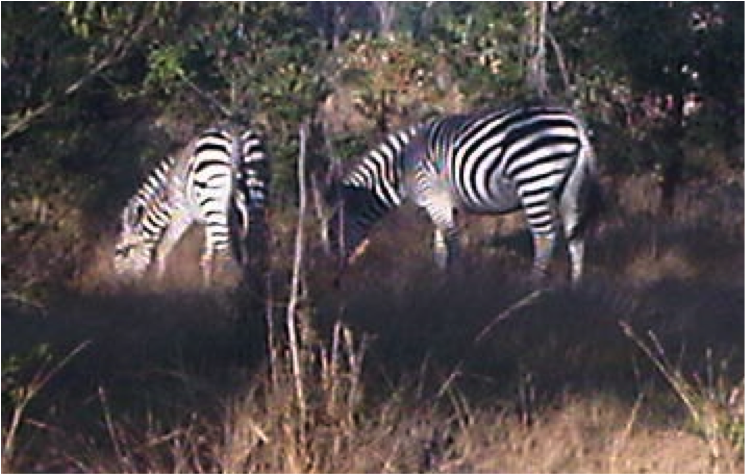
Next I am struck by the eyes of the giraffe, plaintive and loving, not unlike my golden retriever at home.  Then the zebras amaze me.  They are all perfect specimens, as if a doting zookeeper has been following them around. Their stripes are so contrary to any idea of camouflage. They don’t want to hide.  Instead, they are designed to find each other,  for the purpose of solidarity and survival. Their stripes also cause them to blend into each other, which makes life safer for the young and vulnerable. They have no natural predators in this park.  They pretty much thrive in peace.

I am the first to spot the crocodile.  He is underwater, but I see his long slender nose.  In the face of this fast, sharp-toothed endangered species, loving wild things becomes complicated… He is the reason we cannot swim in the river. I want life for this crocodile, yet the idea of his extinction provokes a whisper of relief in me that I cannot deny.

Baboons are a nuisance, we have been told. A few weeks ago one of them actually fought a tourist for a candy bar (or something), knocking him to his death, near Victoria Falls.  Now several baboons are prowling around our truck.  I am uneasy, and avoid looking them in the eye, afraid I will accidentally send the wrong message.  Then we see one in a tree — likely a female, she has a baby in her arms.  Slowing down for that we see another, also with a baby in her arms.  Once I know how to look, I see that the tree is full of mother and baby baboons, as if it is a scheduled play group!  This incredible act of social organization fills me with awe.  I decide to defend the baboon from now on.  It seems they are judged unfairly.

After an hour or so we arrive at the far end of the park where we can get out and stretch before we head back. There are some guards and another car nearby.   I wish I could walk alone for a bit.  I wish that the cars, and my friends, and even the strip of road that we rode along, were gone.  I would linger here, trust the peace, and accept the occasional predation– which seems to be the price of this particular kind of beauty.  I would live from truce to truce like the animals, abiding by their cautious rules of engagement.  Would I be able to freeze and run and fight at the right times, I wonder? ….  I stand under a tree for a bit, then explore a little ways in each direction, but I don’t stray too far from my tribe.

As I get back in the car I realize that there are things that I will never do–like hang glide, or swim with crocodiles, or walk alone in the wild.

I am 35,000 feet in the air, moving at 550 miles per hour toward Lusaka, Zambia. It is -47 degrees Farenheit outside. Although I have been travelling for 27 hours, it is only now, on this final 9 hour leg of the trip, that I begin to seriously contemplate the freefall that is possible from here.  During the first 4 legs of the journey I had been distracted by a missed flight, several reroutes, 2 “flying pills,” and 4 compensatory glasses of wine. But now that I have procured the desired place in the air, I am hit with the realization that I am seriously and dangerously far from everything I know and love.

The other passengers seem nonchalant, even confident, completely unaware of how helpless and absurdly unfit for life we are up here. None of us could withstand the cold temperatures at this altitude for more than 30 seconds, we could not breathe without the pressurized cabin, and there is only enough food and water for a day or two. We are physically incapable of getting ourselves home, both in terms of physical endurance and temporal feasibility. None of us would know the way home anyway.

I am so far away from my children! This thought makes the vertigo the most profound. I try to put down what I feel in my veins, turning my attention to the numbing mechanical buzz of the plane. But the mental and emotional clarity lingers. This trip which I have chosen, not just once but as a regular part of my life, is completely contrary to the instinctual logic, be it maternal, human or animal, that is hard wired  into me. Better to measure things in time than distance, I reason. It is only 10 days. They go to camp for a week in the summer…Going 7000 miles away to a landlocked country in Africa is sort of like that, isn’t it?

I have never been to Zambia, but as I watch the locator arrow move across the map of Africa I am comforted by the idea of getting there. Right now I am in an unnamed space between Cairo, Addis Ababa and Johannesburg. The Lybian Desert and Darfur Mountains are labeled, but other than that I cannot say where I am with much precision. Zambia, a landlocked country the size of Texas,  is still 2500 miles away.  Formerly Northern Rhodesia, the culture is a blend of Bantu and European influence.  It is one of the poorest countries in the world, per capita income is about $1000/year, life expectancy is 41 year of age,the  infant mortality rate is 119/1000 and the maternal mortality rate is 591/100,000.  The economy is showing hopeful signs of growth, with copper and agricultural as principal sources of livelihoods.  Zambia is home to 13 million people, and 3 or 4 of those people are expecting my arrival. I am going to work with a variety of health and social service programs, and visit a village where my colleague Jason worked and lived for two years. I hope to see a hippo and avoid altercations with baboons, and I am going to stand in the mist of Victoria Falls.

I know I will be able to fall asleep soon, and the flight is beginning to feel normal.  I realize that the noplace between places is always like this. God makes a flash appearance, reminding me that this space, so many miles above everything, is something sacred, to be savored. I am the same distance from everything, and from here the world is interconnected and whole. I will try to enjoy how large and small the world is. I will trust sleep and time to take me where I am going, and home again.

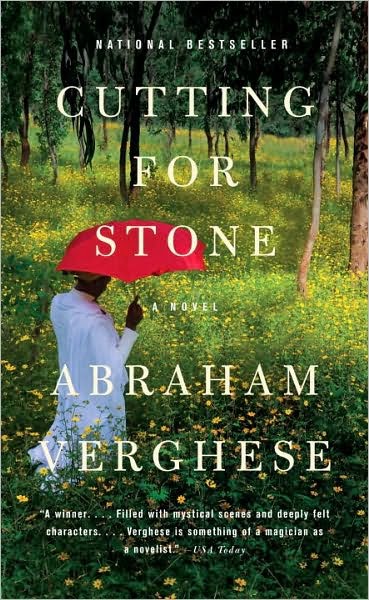
On my recent trip to Ethiopia, I decided to reread Cutting for Stone by Ethiopian-American surgeon Abraham Verghese.  I first read it when it came out in 2009, a beautiful novel that  also provided a window into Ethiopia’s health system.  Now I wanted to test it out on its home turf.

From Addis I was less focused on the ways in which the book could “take me there,” since I was already “there,” working in hospitals, walking the streets, meeting people who had lived through the challenging times that Verghese described.  I wasn’t troubled by the license that Verghese had taken with some of the factual details relating to Ethiopian history or “Missing” Hospital itself…. He had told us it was fiction.  A fiction writer myself, I understood that sometimes you have to make some stuff up or move things around a bit to tell an authentic story. Would Verghese’s story and its messages about life and place and love and fate ring true?  For me, that was a more interesting question than whether his story corresponded to the material and chronological facts.

Reading from my hotel room in Ethiopia, where the hall light streamed into my room all night and the dogs began barking just before dawn,  I realized how much this novel transcends it’s particular setting, and speaks to so many of us who have been shaped by immigration, by separation, and by living in ways that leaves us with more than one place that we can plausibly call home.

Verghese tells us the story of twin boys, with two fathers, two mothers, two countries, and one woman they both love.   We all have so many possible lives and possible selves, and the story of Marion and Shiva his twin reminds us that it is hard to contain all we can be in one life and place, and it may be even harder to contain it in two.

The boys are attached a birth, share a bed, and then are separated by miles, oceans, time, revolution, and their own differences. The story unfolds through the eyes of Marion, as he tries to understand and reconstruct the truth of his past.  What happened?  And why?  There is always more than one answer — a double, an opposite, a twin.  The boys have two parents who raise them, and two others who gave them life.  Their birthmother, Sister Mary Joseph Praise, lived a prayerful life of submissive service, and, we are led to believe, also experienced the spiritual passion of Theresa of Avila.  Thomas Stone, their biological father, also had a divided life, on the one hand a focused, tireless and dutiful surgeon, and on the other a man possessed by binges of excess.

As I read in Addis I realized that many of the diaspora Ethiopians that I am working also have two lives and two places that are home.  I too, am divided, both the person who wants to go home, and the person who wants to stay.  Can we live these double lives, or does one of our selves have to sacrifice itself for the other?  Cutting for Stone asks this question and, as might be expected, shows that there is more than one answer.

For me the special thing about this book was not the fact that “it takes you there.”  In fact, when I look for scenes that capture what is like to walk the streets of Addis or be immersed in the setting, I find that they are few.  This made me realize that while I thought I was experiencing this place in a close up and personal way, Verghese was writing from a more intimate perspective, a surgical distance where the background fades as the human heart is dissected in ways that reveal truths common to all.  Verghese finds the truth and healing of our brokenness through the act of fiction, because, as he puts it,  “where silk and steel fail, story must succeed.”

Sitting at the Java Den at University and Mills before class,  I was not sure what to expect.  Students from PHS 370 were invited to drop in to meet me, connect with each other, and talk about local to global perspectives on public health.  I was armed with a computer, a short novel, and the New York Times in case no one showed.  But I did not even get to read one headline….

Maggie arrived first wanting to explore how to make global health work a part of her life.  Relatively new to UW, she is shifting from a political science focus to a public health focus.  She told us a bit about her work in Bulgaria where she worked with the Roma population.  this video portrays the challenges that this ethnic group faces.

Abby had been on the Uganda Field experience led by John Ferrick and James Ntambe and she has done a lot of coursework related to public health and health disparities.   Pascale who joined us later will participate in the same Uganda program next year.   Laura, a global health certificate student,  joined us and shared that she will be working with Araceli Alonso on the Health by Motorbike program this summer.

Tahiya joined later in the hour and very generously shared stories about her summer in Bangladesh where she worked in the Geneva Camp focusing on children with disabilities.  The camp, established in 1972 to meet the needs of Pakistani’s who were still in Bangladesh after the transition, is now a crowded multi-generational community.  The video focuses on the health risks for children in the camp.

Liz, who is doing an  honors project for the class, hopes to consider homelessness in Madison in a global context through case studies or oral histories.  Stay tuned as she may be willing to share her project in  class or discussion section!

I blog as a reflective practice and to share information and experiences with my students, colleagues and friends. Some of the topics that I will cover this semester include my upcoming global health work in Tanzania in March — I will miss a few classes but will make up for it with some blog posts!  Also, I am working with a group of students who are planning to go to Ecuador to do service learning in a community where I have worked for the past six years.  I am going to “back blog” for them from my journals, so I can share some of my favorite memories and photos with them  and introduce them to the community where they will work.  I am going to cover campus events like lectures by Ruth Levine, who is coming on March 14th, to our annual Global Health Symposium.

I am also planning to do some global health-related book reviews.  Coming soon Is Cutting for Stone, by Abraham Verghese, which takes place in Ethiopia.  I am also reading Haiti after the Earthquake by Paul Farmer.  I will review A Sand County Alamanac, by Aldo Leopold, to explore the implications of a his “land ethic” for a new global health ethic.  Finally, I will reread one of my all time favorites, Cry of the Earth, Cry of the Poor, by Leonardo Boff.   I wonder if it will seem as good as it did when it changed my life many years ago….

Please feel free to comment on this post or make suggestions for future topics!